An Unheard “Carmen”
The new edition of Bizet’s opera Carmen in Apulia and Salzburg
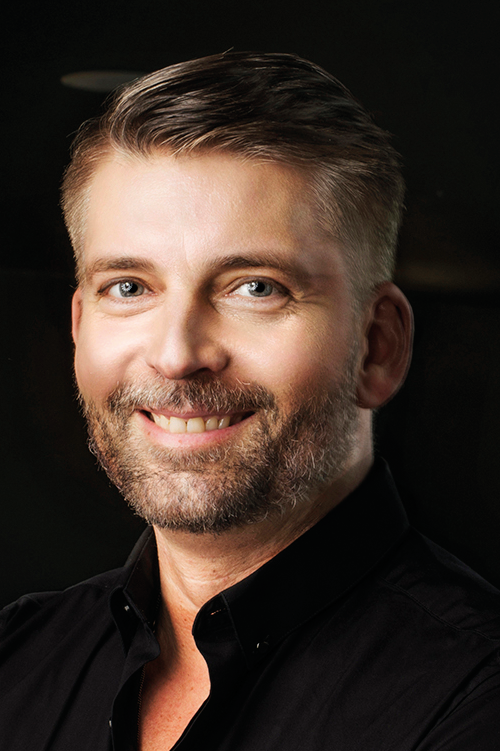
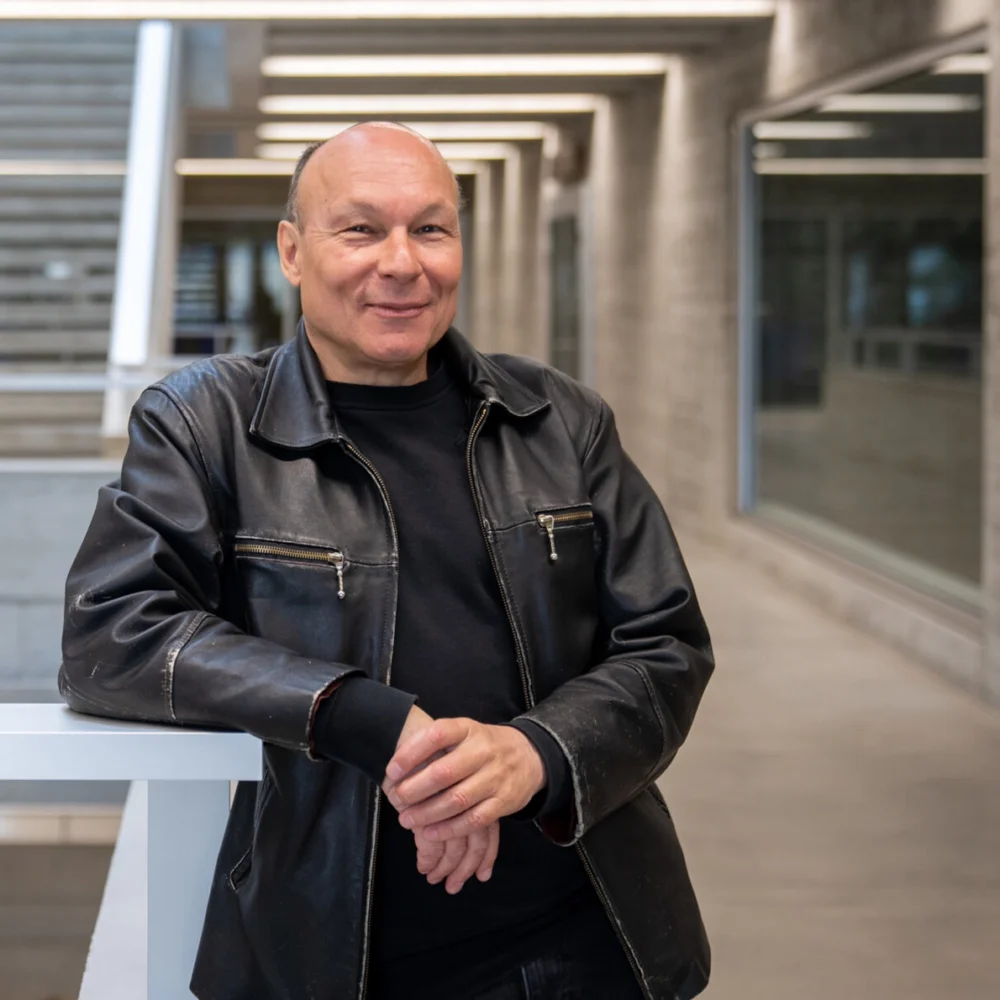
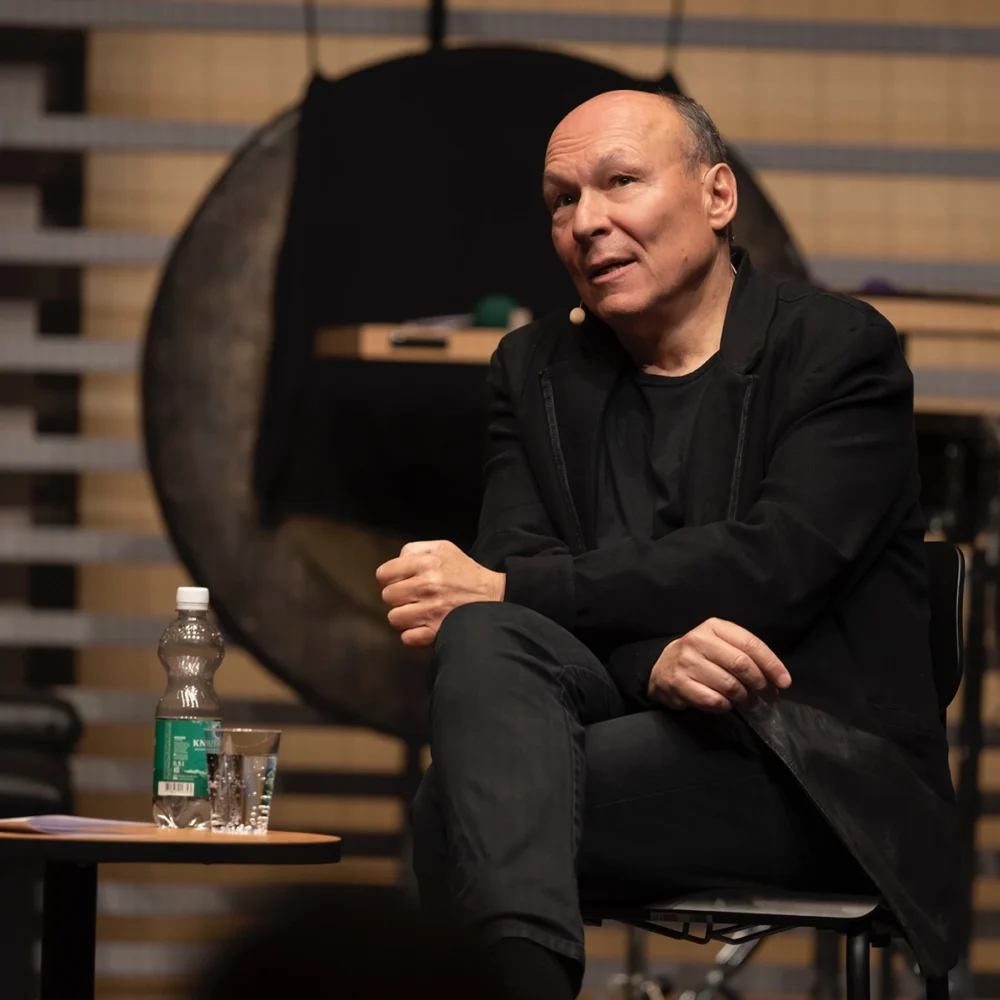
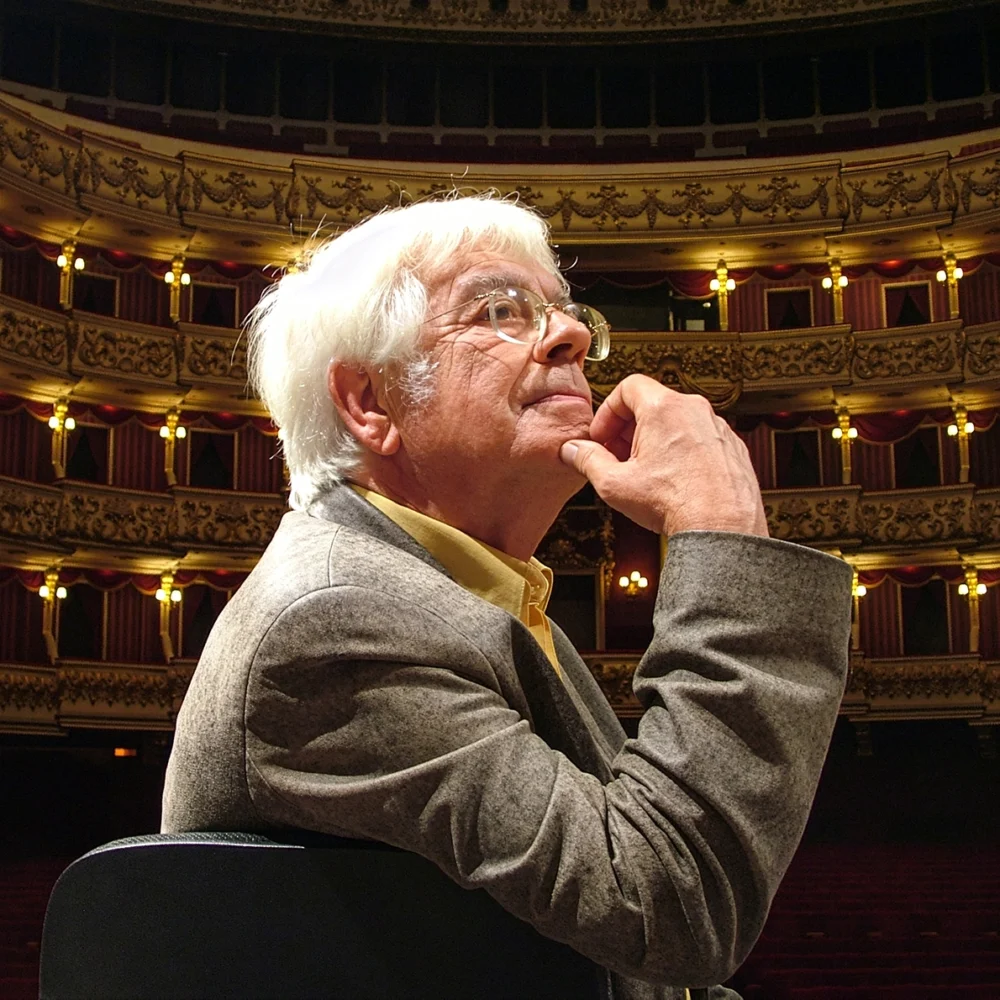
Matthias Pintscher was born in Marl in North Rhine-Westphalia in 1971 and studied composition with Giselher Kleber and Manfred Trojahn. The encounters with Hans Werner Henze, who invited him to Montepulciano in 1991 and 1992, as well as with Helmut Lachenmann, Pierre Boulez and Peter Eötvös were also formative. Among the awards were u. a. 1st prize at the Hitzacker composition competition (1992), the Rolf Liebermann prize and the opera prize of the Körber Foundation in Hamburg (1993 and 1996), the Prix Prince Pierre de Monaco (1999), the composition prize at the Salzburg Easter Festival and the Hindemith Prize of the Schleswig Holstein Music Festival (2000). In 2002 he received the Hans Werner Henze Prize (Westphalian Music Prize). Pintscher first attracted international attention with the opera “Thomas Chatterton” at the Dresden Semperoper (1998), later with his second opera “L’espace dernier” at the Opéra National de Paris (2004). In 2002 he was “composer in residence” with the Cleveland Orchestra, followed by the Konzerthaus Dortmund, Lucerne Festival, RSO Saarbrücken, the Kölner Philharmonie and the RSO Stuttgart des SWR. From 2010-18 he was artist-in-association with the BBC Scottish Symphony Orchestra, from 2014-17 artist-in-residence at the Danish Radio Orchestra and in the 2016-17 season he was the first composer-in-residence at the Elbphilharmonie Hamburg. In August 2021 he was the focus of the Suntory Hall Summer Festival. His Violin Concerto No. 3, “Assonanza”, written for Leila Josefowicz, was premiered in January 2022 with the Cincinnati Symphony Orchestra. Another premiere in the 2021/22 season was “neharot”, a joint commission from Suntory Hall, Orchester Philharmonique de Radio France, Orchester de la Suisse Romande, Los Angeles Philharmonic and Staatskapelle Dresden.
As a conductor, Matthias Pintscher works regularly with major orchestras and ensembles in Europe and the USA, such as the Bavarian Radio Symphony Orchestra, the Los Angeles Philharmonic, the Royal Concertgebouw Orchestra in Amsterdam and the BBC Scottish Symphony Orchestra. Since 2013/14 he has been music director of the Ensemble intercontemporain Paris. In the 2020/21 season, he began a three-year stint as the new Creative Partner of the Cincinnati Symphony Orchestra. Pintscher has also conducted several opera productions for the Berlin State Opera (Beat Furrer’s “Violet Snow”, Wagner’s “Lohengrin”), the Vienna State Opera (Olga Neuwirth’s “Orlando”) and the Théatre du Châtelet in Paris.
From 2007 to 2009 he was a professor of composition at the Hochschule für Musik und Theater in Munich, and from 2010 to 2011 he taught at New York University. Since 2014 he has been professor of composition at the Juilliard School of Music in New York.
| composer_first_name | composer_last_name | title | date | orchestra | conductor | location | special |
|---|---|---|---|---|---|---|---|
| Antonio | Salieri | Cublai, gran Kan de’ Tartari | 10.08.2026 | Orchestra Haydn di Bolzano e Trento | Stefano Ferrario | La Villa (Badia) | weitere Termine |
| Hector | Berlioz | Grande messe des morts | 15.08.2026 | London Symphony Chorus and Orchestra | Antonio Pappano | London (Proms, Royal Albert Hall) | |
| Wolfgang Amadeus | Mozart | Don Giovanni | 16.08.2026 | Scottish Chamber Chorus and Orchestra | Maxim Emelyanychev | Edinburgh (International Festival) | konzertant |
| Hector | Berlioz | Grande messe des morts | 19.08.2026 | Orquesta Sinfónica de Bilbao | Erick Nielsen | San Sebastian (Musikfestivals Quincena, Auditorio Kursaal) | |
| Wolfgang Amadeus | Mozart | La finta giardiniera | 20.08.2026 | Massimiliano Caldi, Regie: Maria Sartova | Danzig | Premiere | |
| Bernd Alois | Zimmermann | Musique pour les soupers du Roi Ubu | 20.08.2026 | Orchestre des Jardins Musicaux | Valentin Reymond | Cernier | |
| Frank | Martinu | Mass for double choir a cappella | 21.08.2026 | Ensemble Aedes | Mathieu Romano | Vézelay (Basilique Sainte-Marie-Madeleine) | |
| Frank | Martinu | Mass for double choir a cappella | 22.08.2026 | La Tempête | Simon-Pierre Bestion | Souillac (Abbatiale Sainte-Marie) | weitere Termine |
| Felix | Mendelssohn Bartholdy | Die erste Walpurgisnacht | 22.08.2026 | MDR-Sinfonieorchester & MDR Chor | Josep Vila i Casanas | Jena (Volkshaus) | |
| Beat | Furrer | Canti della tenebra, In mia vita da vuolp, Presto für Flöte und Klavier, Melodie für Flöte solo, Studie für Klavier | 26.08.2026 | Elina Viluma-Helling (Sopran), Cornelia Sonnleithner (Alt), Maria Iazia (Klavier) Iva Kovac (Flöte), Gerald Preinfalk (Saxophon) | St. Gallen (Burg Gallenstein) | ||
| Joseph | Haydn | Orlando Paladino | 28.08.2026 | Orfeo Orchestra | György Vashegyi | Fertöd (Haydneum Concerts at Esterházy Palace) | |
| Anton | Bruckner | 9. Symphonie | 28.08.2026 | London Symphony Orchestra | Sir Antonio Pappano | Snape (Maltings Concert Hall) | weitere Termine |
| Hector | Berlioz | La damnation de Faust | 30.08.2026 | Choeur de Radio France, Les Siècles | Jakob Lehmann | London (BBC Proms) | konzertant |
| Joseph | Haydn | L´isola disabitata | 30.08.2026 | Orkest van de XVIIIe Eeuw | Oldenburg | ||
| Hector | Berlioz | Orphée | 01.09.2026 | Chor und Symphonisches Orchester der Opera Ballet Vlaanderen | Francesco Corti | Antwerpen | |
| Camille | Saint-Saëns | Samson et Dalila | 03.09.2026 | National Forum of Music | Thomas Guggeis | Wroclaw (Orlen Main Hall) | |
| Gustav | Holst | The Planets | 03.09.2026 | Robert Schumann Philharmonie | Benjamin Reiners | Chemnitz | |
| Anton | Bruckner | 4. Sinfonie | 08.09.2026 | Staatskapelle Berlin | Christian Thielemann | Berlin (Philharmonie) | |
| Jules | Massenet | Werther | 11.09.2026 | Marie Jacquot, Regie: Tatjana Gürbaca | Kopenhagen | Premiere | |
| Siegfried Schäfer / | Guido Masanetz | Auszüge aus Verlieb‘ dich nicht in eine Heilige/In Frisco ist der Teufel los | 11.09.2026 | Loh-Orchester Sondershausen | Annalena Hoesel | Nordhausen | konzertant, weitere Termine |
| Dieter | Ammann | pRESTO sOSTINATO | 12.09.2026 | Ensemble Modern & Ensemble TIMF | Michael Wendeberg | Tongyeong (Concert Hall) | |
| Eric | Coates | Calling All Workers | 12.09.2026 | Bad Reichenhaller Philharmoniker | Daniel Spaw | Bad Reichenhall (Königliches Kurhaus) | |
| Andreas N. | Tarkmann | Die verlorene Melodie | 12.09.2026 | Staatskapelle Weimar | Weimar (Theaterfest) | ||
| Wolfgang Amadeus | Mozart | Così fan tutte | 12.09.2026 | Sebastiano Rolli, Regie: Martina Gredler | Magdeburg | Premiere | |
| Anton | Bruckner | 3. Symphonie | 13.09.2026 | Orchestre de l'opéra de Lyon | Daniele Rustioni | Lyon | |
| Régis | Campo | Lumen | 13.09.2026 | Stuttgarter Philharmoniker | Rémy Ballot | Besancon (Festival de Musique) | |
| Arnold | Bax | Octet | 14.09.2026 | Ensemble Kontrapunkte | Gottfried Rabl | Wien (Musikverein) | |
| Dieter | Ammann | Boost | 16.09.2026 | Tonhalle-Orchester | Paavo Järvi | Zürich (Tonhalle) | |
| Anton | Bruckner | 3. Symphonie | 17.09.2026 | Essener Philharmoniker | Bertrand de Billy | Essen (Alfried Krupp Saal) | |
| Anton | Bruckner | 8. Symphonie in c-Moll | 17.09.2026 | Gewandhausorchester | Herbert Blomstedt | Leipzig (Gewandhaus) | |
| Andreas N. | Tarkmann | Na warte, sagte Schwarte | 17.09.2026 | Reinhild Köhncke (Sprecherin), Mitglieder Mecklenburgische Staatskapelle | Hang Che | Schwerin (M*Halle) | weitere Termine |
| Ambroise | Thomas | Hamlet | 18.09.2026 | Michael Schönwandt, Regie: Krzysztof Warlikowski | Paris (Opéra National) | Premiere | |
| Wolfgang Amadeus | Mozart | Così fan tutte | 19.09.2026 | Royal Northern Sinfonia | Dinis Sousa | Gateshead (The Sage) | konzertant |
| Wolfgang Amadeus | Mozart | Le nozze di Figaro | 19.09.2026 | Andreas Wolf, Regie: Walter Sutcliffe | Halle | Premiere | |
| Wolfgang Amadeus | Mozart | Die Zauberflöte | 20.09.2026 | Tarmo Peltokoski, Regie: Daniele Finzi Pasca | Zürich | Premiere | |
| Dieter | Ammann | Violation | 20.09.2026 | Tonhalle-Orchester | Julia Kurzydlak | Zürich (Tonhalle) | |
| Georges | Bizet | Carmen | 20.09.2026 | Chris Stark, Regie: Harry Fehr | London (Blackheath Halls) | Premiere | |
| Philipp | Maintz | choralvorspiel XXXIII (in te domine speravi) für orgel solo | 20.09.2026 | Roman Summereder (Orgel) | Hannover (Nazarethkirche) | Uraufführung | |
| Antonín | Dvorák | Rusalka | 22.09.2026 | Giacomo Sagripanti, Regie: Stefano Poda | Toulouse | Premiere | |
| Philipp | Maintz | choralvorspiel VIII (aus tiefer not schrei ich zu dir), choralvorspiel XL (te deum laudamus), choralvorspiel XLVI (morgenglanz der ewigkeit), choralvorspiel LI (kyrie XI, orbis factor) | 23.09.2026 | Hansjörg Albrecht (Orgel) | Berlin (Kathedrale St. Hedwig) | Uraufführung (choralvorspiel VIII) | |
| Andrea Lorenzo | Scartazzini | Brucknerblume für Orgel | 23.09.2026 | Hansjörg Albrecht (Orgel) | Berlin (Kathedrale St. Hedwig) | ||
| Hector | Berlioz | Harold en Italie | 23.09.2026 | Timothy Ridout (Viola), Scottish Chamber Choir | Maxim Emelyanychev | Perth (Concert Hall) | |
| Wolfgang Amadeus | Mozart | Mitridate, re di Ponto | 24.09.2026 | Riccardo Frizza, Regie: Claus Guth | Neapel | Premiere | |
| Andreas N. | Tarkmann | Die Prinzession auf der Erbst | 24.09.2026 | Stephan Hübner (Sprecher), Staatsorchester Darmstadt | Guillaume Fauchère | Darmstadt | auch 25.9. |
| Wolfgang Amadeus | Mozart | Die Zauberflöte | 25.09.2026 | Gianluca Martinenghi, Regie: Hugo de Ana | Sassari | Premiere | |
| Peter | Sculthorpe | Sun Music II | 25.09.2026 | Göttinger Symphonieorchester | Nicholas Milton | Göttingen (Stadthalle) | |
| Matthias | Pintscher | NUR | 25.09.2026 | Inon Barnatan (Klavier), Utah Symphony | Matthias Pintscher | Salt Lake City (Abravanel Hall) | |
| Lubica | Cekovská | At Béla's Window | 25.09.2026 | Slovak Radio Symphony Orchestra | Rastislav Štúr | Bratislava (Grand Concert Hall of Slovak Radio) | |
| Jules | Massenet | Werther | 25.09.2026 | Jakub Przybicien, Regie: Matthias Kitter | Nordhausen | Premiere | |
| Hector | Berlioz | La damnation de Faust | 26.09.2026 | Johannes Braun, Regie: Lorenzo Fioroni | Graz | Premiere | |
| Anders | Hillborg | Cello Concerto | 26.09.2026 | Ariel Barnes (Cello), Nürnberger Symphoniker | Jonathan Darlington | Nürnberg (Meistersingerhalle) | |
| Arnold | Bax | Tintagel | 28.09.2026 | Philharmonisches Orchester Bremerhaven | Florian Ludwig | Bremerhaven | |
| Beat | Furrer | Pedro Beriso | 29.09.2026 | Ulfried Staber (Bass), Gerald Preinfalk (Saxophon) | Graz (BRUSEUM/Neue Galerie) | Uraufführung | |
| Wolfgang Amadeus | Mozart | Zaide | 30.09.2026 | George Petrou, Regie: David Hermann | Frankfurt | Premiere | |
| Anton | Bruckner | 7. Symphonie | 01.10.2026 | Orchestra del Maggio Musicale Fiorentino | Thomas Guggeis | Florenz | |
| George | Benjamin | At first Light | 02.10.2026 | Ensemble Modern Akademie | Wolfenbüttel (Landesmusikakademie Niedersachsen) | ||
| Anton | Bruckner | 2. Symphonie | 02.10.2026 | Deutsche Staatsphilharmonie Rheinland-Pfalz | Christoph Eschenbach | Trier (Ehem. Reichsabtei St. Maximin) | |
| Andrea Lorenzo | Scartazzini | Einklang | 02.10.2026 | Jenaer Philharmonie | Simon Gaudenz | Jena (Volkshaus) | |
| Georges | Bizet | Carmen | 02.10.2026 | Michele Spotti, Regie: Ted Huffman | Valencia (Palau de les Arts Reina Sofia) | Premiere | |
| Wolfgang Amadeus | Mozart | Idomeneo | 02.10.2026 | Stefan Vladar, Regie: Philipp Himmelmann | Lübeck | Premiere | |
| Pietro Mascagni / | Ruggero Leoncavallo | Cavalleria Rusticana/Pagliacci | 03.10.2026 | Sebastian Lang-Lessing, Regie: Pamela Recinella | Hagen | Premiere | |
| Jules | Massenet | Werther | 03.10.2026 | Chloé Dufresne, Regie: Ted Huffman | Rennes | Premiere | |
| Umberto | Giordano | Andrea Chénier | 03.10.2026 | Daniel Cohen, Regie: John Dew | Darmstadt | Premiere | |
| Peter I. | Tschaikowsky | Dornröschen | 03.10.2026 | Carlo Benedetto Cimento, Choreographie: Reginaldo Oliveira | Palermo (Teatro Massimo) | Premiere | |
| Fromental | Halévy | La Juive | 03.10.2026 | Felix Bender, Regie: Marco Storman | Ulm | Premiere | |
| Anton | Bruckner | 5. Symphonie | 04.10.2026 | Philharmonia Orchestra | Herbert Blomstedt | London (Royal Festival Hall) | |
| Jacques | Offenbach | Les contes d'Hoffmann | 04.10.2026 | Sejoon Park, Regie: Anja Nicklich | Koblenz | Premiere | |
| Georg Friedrich | Händel | Alcina | 06.10.2026 | Emmanuelle Haim, Regie: Ewelina Marciniak | Lille | Premiere | |
| Andreas N. | Tarkmann | Wesendonck-Lieder | 08.10.2026 | Lapland Chamber Orchestra | Simon Rivard | Rovaniemi (Korundi) | |
| Manfred | Trojahn | ... mit durchscheinender Melancholie | 08.10.2026 | Hochschulorchester | Hamburg (Hochschule für Musik und Theater) | auch 9.10. | |
| Miroslav | Srnka | Superorganisms 1-4 | 09.10.2026 | Los Angeles Philharmonic | Susanna Mälkki | Los Angeles (Walt Disney Concert Hall) | |
| Georg Friedrich | Händel | Alcina | 09.10.2026 | Orchestra del Teatro di San Carlo | Iván López-Reynoso | Neapel (Teatro di San Carlo) | konzertant |
| Anton | Bruckner | 9. Symphonie | 10.10.2026 | Bamberger Symphoniker | Manfred Honeck | Bamberg (Konzerthalle) | |
| Christoph Willibald | Gluck | Orphée et Eurydice | 10.10.2026 | Alphonse Cemin, Regie: Lorraine de Sagazan | Nantes (Théâtre Graslin) | Premiere | |
| Jonathan | Harvey | Bird Concerto with Pianosong | 10.10.2026 | Antoine Francoise (Piano), Ensemble Contrechamps | Gregory Charette | Genf (Auditorium Ansermet) | |
| Peter I. | Tschaikowsky | Eugen Onegin | 10.10.2026 | Hermes Helfricht, Regie: Matthew Ferraro | Erfurt | Premiere | |
| Beat | Furrer | Herbst, Enigma I-IV & VI, Enigma V, Enigma VII | 10.10.2026 | Cantando Admont | Cordula Bürgi | Graz (Helmut List Halle) | |
| Georg Friedrich | Händel | Ottone | 11.10.2026 | Václav Luks, Regie: Jetske Mijnssen | Frankfurt | Premiere | |
| Wolfgang Amadeus | Mozart | Le nozze di Figaro | 13.10.2026 | Pablo González, Regie: Marta Pazos | Teneriffa (Auditorio) | Premiere | |
| Georg Friedrich | Händel | Riccardo primo, Re d’Inghilterra | 14.10.2026 | Les Arts Florissants | Paul Agnew | Dijon (Grand Théatre) | weitere Termine |
| Andrea Lorenzo | Scartazzini | Torso - Epitaph | 14.10.2026 | Luzerner Sinfonieorchester | Michael Sanderling | Luzern (KKL) | auch 15.10. |
| Andrea Lorenzo | Scartazzini | Brucknerblume für Orgel | 14.10.2026 | Daniel Baker (Orgel) | Luzern (KKL) | auch 15.10. | |
| Anton | Bruckner | 3. Symphonie | 15.10.2026 | Philharmonisches Orchester Erfurt | Hermes Helfricht | Erfurt | |
| Francesco | Filidei | Puccini alla caccia | 15.10.2026 | Studierende der HKB - Musik | Brian Archinal | Bern (Fachhochschule BFH) | |
| Beat | Furrer | Konzert für Klavier und Orchester | 15.10.2026 | Orquesta Sinfónica de l'ESMUC | Ernest Martínez Izquierdo | Barcelona | |
| Gioachino | Rossini | Il barbiere di Siviglia | 15.10.2026 | Chloe Rooke, Regie: Annabel Arden | Glyndebourne (Opera Festival) | Premiere | |
| Bernd Alois | Zimmermann | Musique pour les soupers du Roi Ubu | 15.10.2026 | Münchner Philharmoniker | Anja Bihlmaier | München (Isarphilharmonie) | |
| Torsten | Rasch | Die wunderbaren Jahre | 16.10.2026 | Christian Blex, Regie: Nora Bussenius | Dresden | Premiere | |
| Camille | Saint-Saëns | Samson et Dalila | 17.10.2026 | Kiril Stankow, Regie: Thomas Schmidt-Ehrenberg | Schwerin (Theaterzelt am Küchengarten) | Premiere | |
| Anton | Bruckner | 5. Symphonie | 17.10.2026 | NHK Symphony Orchestra | Matthias Bamert | Tokio (NHK Hall) | |
| Salvatore | Sciarrino | Gesualdo senza parole | 17.10.2026 | Klangforum Wien | Sylvain Cambreling | Wien (Konzerthaus) | |
| Charles | Gounod | Faust | 20.10.2026 | Daniele Rustioni, Regie: Johannes Erath | Mailand (Teatro alla Scala) | Premiere | |
| Anton | Bruckner | Symphonie f-Moll | 22.10.2026 | Symphonieorchester des Bayerischen Rundfunks | Simone Young | München (Residenz) | |
| Ruggiero | Leoncavallo | La Bohème | 22.10.2026 | Chor und Orchester der Oper Graz | Daniela Musca | Graz | konzertant |
| Dieter | Ammann | Viola Concerto „No templates“ | 23.10.2026 | John Stulz (Viola), Ensemble Intercontemporain | George Benjamin | Paris (Cité de la Musique) | |
| Georg Friedrich | Händel | Flavio, Re de’ Langobardi | 23.10.2026 | Camille Delaforge, Regie: Max Emanuel Cencic | Meiningen | Premiere | |
| Georg Friedrich | Händel | Semele | 23.10.2026 | Orchestra e Coro del Teatro Comunale di Bologna | Rinaldo Alessandrini | Bologna (Teatro Comunale) | konzertant |
| Georg Friedrich | Händel | Occasional Oratorio | 24.10.2026 | La strada armónica | Matthias Beckert | Würzburg (KdöR) | |
| Benjamin | Britten | Young Apollo | 24.10.2026 | Camerata Bern | Alexander Melnikov | Bern (Zentrum Paul Klee) | |
| Georg Friedrich | Händel | Semele | 25.10.2026 | Orchestra, Coro e Tecnici del Teatro Comunale di Bologna | Rinaldo Alessandrini | Bologna (Teatro Comunale) | |
| Arnold | Bax | Concerto for Flute, Oboe, Harp & String Quartet | 27.10.2026 | Warsaw Philharmonic Orchestra | Warschau (Chamber Music Hall) | ||
| Matthias | Pintscher | Assonanza | 29.10.2026 | Leila Josefowicz (Violine), Royal Stockholm Philharmonic Orchestra | Matthias Pintscher | Stockholm (Konserthuset) | |
| Wolfgang Amadeus | Mozart | Così fan tutte | 29.10.2026 | N.N., Regie: Nilufar K. Münzing | Klagenfurt | Premiere | |
| Dieter | Ammann | glut | 30.10.2026 | Estonian National Symphony Orchestra | Gregor A. Mayrhofer | Tallinn (Festival AFEKT, Estonia Concert Hall) | |
| Pietro Mascagni / | Ruggero Leoncavallo | Cavalleria Rusticana/Pagliacci | 31.10.2026 | Sebastian Lang-Lessing, Regie: Pamela Recinella | Hagen | Premiere | |
| Peter I. | Tschaikowsky | Schwanensee | 31.10.2026 | Camerata Louis Spohr | Bernd Peter Fugelsang | Düsseldorf | |
| Ambroise | Thomas | Hamlet | 01.11.2026 | Chelsea Opera Group | Jonathon Cole-Swinard | London (Cadogan Hall) | |
| Dieter | Ammann | Turn | 04.11.2026 | Tonhalle-Orchester | Paavo Järvi | Zürich (Tonhalle) | auch 5./6.11. |
| Christoph Willibald | Gluck | Iphigénie en Tauride | 06.11.2026 | David Bates, Regie: Lyndsey Turner | London (Coliseum) | Premiere | |
| Anton | Bruckner | 4. Symphonie | 06.11.2026 | Bamberger Symphoniker | Jakub Hrusa | Brünn (Janácek-Theater) | |
| Dieter | Ammann | glut | 06.11.2026 | hr-Sinfonieorchester | Michael Wendeberg | Frankfurt (hr-Sendesaal) | |
| Dieter | Ammann | Core | 07.11.2026 | Orchester der Oper Zürich | Gianandrea Noseda | Zürich | |
| Pietro | Mascagni | Cavalleria rusticana | 07.11.2026 | Vito Cristofaro, Regie: Gil Mehmert | Dortmund | Premiere | |
| Beat | Furrer | Neues Werk für Orchester | 07.11.2026 | Kammerorchester Basel | Pierre Bleuse | Basel (Stadtcasino) | Uraufführung |
| Hector | Berlioz | Grande messe des morts | 08.11.2026 | Wiener Symphoniker | Maxime Pascal | Wien (Musikverein) | |
| Engelbert | Humperdinck | Dornröschen | 08.11.2026 | Markus Poschner, Regie: Anna Bergmann | Hamburg | Premiere | |
| Wolfgang Amadeus | Mozart | La clemenza di Tito | 13.11.2026 | Ottavio Dantone, Regie: Chiara Muti | Ravenna (Ravenna Festival) | Premiere | |
| Camille | Saint-Saëns | Samson et Dalila | 13.11.2026 | Orchestra e Coro del Teatro Comunale di Bologna | Roberto Abbado | Bologna (Teatro Comunale) | konzertant |
| Hector | Berlioz | Orphée | 14.11.2026 | Antony Walker, Regie: José Maria Condemi | Pittsburgh (Byham Theater) | Premiere | |
| Wolfgang Amadeus | Mozart | Die Zauberflöte | 14.11.2026 | Ottavio Dantone, Regie: Chiara Muti | Ravenna (Ravenna Festival) | Premiere | |
| Wolfgang Amadeus | Mozart | Le nozze di Figaro | 14.11.2026 | Danyil Ilkiv, Regie: Marijke Malitius | Passau | Premiere | |
| Beat | Furrer | a sei voci für 6 Frauenstimmen | 15.11.2026 | Cantando Admont | Cordula Bürgi | Münchendorf (Musiksalon) | |
| Anton | Bruckner | 4. Symphonie | 18.11.2026 | HSO Hochschulsinfonieorchester | Roland Kluttig | Dresden (Hochschule für Musik) | |
| Georg Friedrich | Händel | Agrippina | 21.11.2026 | Gerd Amelung, Regie: Claudia Isabel Martin | Heidelberg | Premiere | |
| Václav | Trojan | Märchen | 21.11.2026 | Kammerorchester der TUD | Florian Streich | Groß-Umstadt (Stadthalle) | |
| Wolfgang Amadeus | Mozart | Le nozze di Figaro | 21.11.2026 | Hélio Vida, Regie: Nikolaus Habjan | Basel | Premiere | |
| Henry | Purcell | Dido and Aeneas | 21.11.2026 | Daniel Geiss, Regie: Seollyeon Konwitschny-Lee | Neubrandenburg | Premiere | |
| Wolfgang Amadeus | Mozart | La clemenza di Tito | 25.11.2026 | David McVicar, Regie: Bettina Neuhaus | Barcelona | Premiere | |
| Wolfgang Amadeus | Mozart | Don Giovanni | 26.11.2026 | Hungarian Philharmonic Orchestra | Giancarlo Andretta | Budapest (Müpa) | konzertant |
| Georg Friedrich | Händel | Agrippina | 27.11.2026 | Constantin Trinks, Regie: Walter Sutcliffe | Sofia | Premiere | |
| Georg Friedrich | Händel | Agrippina | 28.11.2026 | Jinie Ka, Regie: Gregor Horres | Linz (Black Box Musiktheater) | Premiere | |
| Andreas N. | Tarkmann | Das Mondklavier | 29.11.2026 | Beate Bachmann (Sprecherin), Jenaer Philharmonie | Jena (Volkshaus) | ||
| Giovanni | Sollima | Violoncelles, vibrez! | 02.12.2026 | Münchener Kammerorchester | Daniel Giglberger | Olten (Stadttheater) | |
| Dieter | Ammann | Gehörte Form - Hommages | 03.12.2026 | Trio Sola | Zürich (Tonhalle) | ||
| Georges | Bizet | Les Pêcheurs de Perles | 05.12.2026 | Marc Minkowski, Regie: Pierre-André Weitz | Paris (Théâtre des Champs-Elysées) | Premiere | |
| Andreas N. | Tarkmann | Nils Holgersson | 06.12.2026 | Erik Brünner (Sprecher), Jugendsinfonieorchester Heinrich-Schütz-Konservatorium, Dresdner Philharmonie | Milko Kersten | Dresden (Kulturpalast) | auch 7.12. |
| Francesco | Filidei | I funerali dell’anarchico Serantini | 09.12.2026 | Studierende der Hochschule | Karlsruhe (Hochschule für Musik) | ||
| Miroslav | Srnka | Smoke | 10.12.2026 | NHK Symphony Orchestra | Maxim Emelyanychev | Tokio (Suntory Hall) | Uraufführung |
| Wolfgang Amadeus | Mozart | Le nozze di Figaro | 13.12.2026 | Marta Gardolinska, Regie: Jetske Mijnssen | Genf (Bâtiment des Forces Motrices) | Premiere | |
| Hector | Berlioz | La damnation de Faust | 17.12.2026 | Bertrand de Billy, Regie: Lydia Steier | Wien (Staatsoper) | Premiere | |
| Wolfgang Amadeus | Mozart | Così fan tutte | 18.12.2026 | Felix Bender, Regie: David Bösch | Ulm | Premiere | |
| Jules | Massenet | Thaïs | 18.12.2026 | Pierre Dumoussaud, Regie: Olivier Lepelletier-Leeds | Liège | Premiere | |
| Georg Friedrich | Händel | Flavio, Re de’ Langobardi | 19.12.2026 | Karsten Januschke, Regie: Tilmann Köhler | Frankfurt (Bockenheimer Depot) | Premiere | |
| Georges | Bizet | Les Pêcheurs de Perles | 29.12.2026 | Victorien Vanoosten, Regie: Mirabelle Ordinaire | Toulon (Zénith) | Premiere | |
| Wolfgang Amadeus | Mozart | Thamos, König in Ägypten | 12.01.2027 | Orchestra Haydn di Bolzano e Trento | Christophe Rousset | Bozen (Auditorium) | |
| Dieter | Ammann | glut | 13.01.2027 | Tonhalle-Orchester | Gianandrea Noseda | Zürich (Tonhalle) | |
| Jules | Massenet | Werther | 16.01.2027 | Staatsphilharmonie Nürnberg | Christopher Schumann | Nürnberg | konzertant |
| Wolfgang Amadeus | Mozart | La clemenza di Tito | 19.01.2027 | Stefano Montanari, Regie: Rafael R. Villalobos | Valencia | Premiere | |
| Richard | Dubugnon | Sonnenring | 20.01.2027 | Janine Jansen (Violine), Orchestre de la Suisse Romande | Jonathan Nott | Genf (Victoria Hall) | |
| Georg Friedrich | Händel | Orlando | 21.01.2027 | Daniel Espasa, Regie: Rafael Villalobos | Teneriffa (Auditorio) | Premiere | |
| Antonín | Dvorák | Rusalka | 23.01.2027 | Francesco Angelico, Regie: Vasily Barkhatov | Graz | Premiere | |
| Christoph Willibald | Gluck | Orfeo ed Euridice | 23.01.2027 | Eric Staiger, Regie: Aileen Schneider | Oldenburg | Premiere | |
| Engelbert | Humperdinck | Königskinder | 23.01.2027 | Markus Poschner, Regie: Paul-Georg Dittrich | Linz | Premiere | |
| Giovanni | Sollima | When We Were Trees | 24.01.2027 | Südwestdeutsches Kammerorchester | Reto Bieri | Pforzheim (CongressCentrum) | |
| Andreas N. | Tarkmann | Nils Holgersson | 24.01.2027 | Oliver Moumouris (Sprecher), Württembergische Philharmonie | Hans Grischkat | Reutlingen (Georgensaal) | |
| Manfred | Trojahn | Abendröthe | 28.01.2027 | Christian Gerhaher (Bariton), Gerold Huber (Piano) | Kronberg (Kronberg Academy, Casals Forum) | auch 4.2. München | |
| Benjamin | Britten | Young Apollo | 29.01.2027 | Dresdner Philharmonie | Donald Runnicles | Dresden (Kulturpalast) | |
| Christoph Willibald | Gluck | Orfeo ed Euridice | 29.01.2027 | Kirill Gerstein (Klavier), Dresdner Philharmonie | Aapo Häkkinen, Regie: Tero Saarinen | Helsinki | Premiere |
| Engelbert | Humperdinck | Königskinder | 30.01.2027 | Justus Thorau, Regie: Angela Denoke | Saarbrücken | Premiere | |
| Antonín | Dvorák | Rusalka | 30.01.2027 | Jiri Rozen, Regie: Caterina Cianfarini | Basel | Premiere | |
| Wolfgang Amadeus | Mozart | Le nozze di Figaro | 30.01.2027 | Marco Alibrando, Regie: Marcos Darbyshire | Weimar | Premiere | |
| Peter I. | Tschaikowsky | Eugen Onegin | 05.02.2027 | Felix Bender, Regie: Benjamin Künzel | Ulm | Premiere | |
| Wolfgang Amadeus | Mozart | Don Giovanni | 05.02.2027 | Václav Luks, Regie: Jiri Herman | Brünn (Janácek-Theater) | Premiere | |
| Wolfgang Amadeus | Mozart | La clemenza di Tito | 05.02.2027 | John Warner, Regie: Krystian Lader | Gelsenkirchen | Premiere | |
| Jean-Philippe | Rameau | Les Boréades | 05.02.2027 | Camille Delaforge, Regie: R.B. Schlather | Dublin (Irish National Opera) | Premiere | |
| Anton | Bruckner | 8. Symphonie | 06.02.2027 | Gewandhausorchester | Christoph Gedschold | Leipzig (Opernhaus) | |
| Wolfgang Amadeus | Mozart | Così fan tutte | 10.02.2027 | Thomas Hengelbrock, Regie: Netia Jones | London (Royal Opera House) | Premiere | |
| Jules | Massenet | Werther | 11.02.2027 | Nathalie Stutzmann, Regie: Robert Carsen | Paris (Opéra National) | Premiere | |
| Frank | Martinu | Mass for double choir a cappella | 11.02.2027 | BBC Singers and Edvard Grieg Kor | Daniel Hyde | Bergen (Grieghallen) | |
| Henry | Purcell | Dido and Aeneas | 13.02.2027 | Lorenz Höß, Regie: Markus Dietze | Koblenz | Premiere | |
| Wolfgang Amadeus | Mozart | Don Giovanni | 13.02.2027 | Gerrit Prießnitz, Regie: Anna-Sophie Mahler | Innsbruck | Premiere | |
| Camille | Saint-Saëns | Samson et Dalila | 13.02.2027 | Marco Comin, Regie: N.N. | Bremerhaven | Premiere | |
| Ludwig van | Beethoven | Fidelio | 17.02.2027 | Kensho Watanabe, Regie: Ruth Knight | Glasgow | Premiere | |
| Georg Friedrich | Händel | Samson | 18.02.2027 | Monteverdi Chor, Lautten Compagney | Antonius Adamske | Hamburg (Elbphilharmonie) | |
| Georg Friedrich | Händel | Rinaldo | 22.02.2027 | Philippe Jaroussky, Regie: Valentina Carrasco | Paris (Théâtre des Champs-Elysées) | Premiere | |
| Frank | Martinu | Mass for double choir a cappella | 26.02.2027 | Estonian Philharmonic Chamber Choir | Tõnu Kaljuste | Rotterdam (de Doelen) | weitere Termine |
| Dieter | Ammann | unbalanced instability für Violine und Kammerorchester | 25.02.2027 | Carolin Widmann (Violine), Tonhalle-Orchester | Hannu Lintu | Zürich (Tonhalle) | |
| Oliver | Leith | Last Days | 27.02.2027 | André de Ridder, Friedrike Scheunchen, Regie: Lily Kuhlmann | Freiburg | Premiere | |
| Bedrich | Smetana | Die verkaufte Braut | 28.02.2027 | Tómas Netopil, Regie: Laurent Pelly | Köln | Premiere | |
| Wolfgang Amadeus | Mozart | Le nozze di Figaro | 05.03.2027 | Kaspar Zehnder, Regie: Joel Lauwers | Metz | Premiere | |
| Georg Friedrich | Händel | Serse | 06.03.2027 | Clément Lonca, Regie: Lorenzo Fioroni | Bern | Premiere | |
| Ambroise | Thomas | Hamlet | 07.03.2027 | Seok-Won Hong, Regie: Nicola Berloffa | Teneriffa (Auditorio) | Premiere | |
| Andreas N. | Tarkmann | König Karotte | 11.03.2027 | Stephan Hübner (Sprecher), Staatsorchester Darmstadt | Darmstadt | ||
| Georg Friedrich | Händel | Rinaldo | 14.03.2027 | Philippe Jaroussky, Regie: Valentina Carrasco | Zürich | Premiere | |
| Bohuslav | Martinu | Konzert Nr. 2 für Violine und Orchester | 15.03.2027 | Kirill Kobantschenko (Violine), Sinfonia Academica | David Holzinger | Wien (Mozartsaal) | |
| Christoph Willibald | Gluck | Iphigénie en Aulide | 20.03.2027 | Ivan Demidov, Regie: Jochen Biganzoli | Augsburg | Premiere | |
| Charles | Gounod | Faust | 23.03.2027 | Orchestre Symphonique de la Garde républicaine | Bastien Stil | Paris (Théâtre des Champs-Élysées) | konzertant |
| Lubica | Cekovská | Toy Procession for orchestra | 08.04.2027 | Bamberger Symphoniker | Juraj Valcuha | Fulda (Schlosstheater) | auch 10./11.4. Bamberg |
| Georg Friedrich | Händel | Rinaldo | 09.04.2027 | Francesco Corti, Regie: Nadja Loschky | Wien (Theater an der Wien) | Premiere | |
| Wolfgang Amadeus | Mozart | Don Giovanni | 10.04.2027 | Levente Török, Regie: Rahel Thiel | Aachen | Premiere | |
| Andreas N. | Tarkmann | Die verlorene Melodie | 11.04.2027 | Stephan Hübner, Sprecher / Jenaer Philharmonie | Arturs Oskars Mitrevics | Jena (Volkshaus) | |
| Wolfgang Amadeus | Mozart | La clemenza di Tito | 16.04.2027 | N.N., Regie: Hinrich Horstkotte | Meiningen | Premiere | |
| Francesco | Cilèa | L'Arlesiana | 17.04.2027 | Staatskapelle Weimar | Daniel Carter | Weimar | konzertant |
| Bedrich | Smetana | Die verkaufte Braut | 17.04.2027 | N.N., Regie: Maren Schäfer | Krefeld | Premiere | |
| Hector | Berlioz | Orphée | 20.04.2027 | Speranza Scapucci, Regie: Ted Huffman | Paris (Théâtre des Champs-Elysées) | Premiere | |
| Andreas N. | Tarkmann | Die Prinzessin auf der Erbse | 21.04.2027 | Antje Horn (Erzählerin), Meininger Hofkapelle | Meiningen | ||
| Antonín | Dvorák | Rusalka | 23.04.2027 | Daniel Inbal, Regie: Kai Anne Schuhmacher | Pforzheim | Premiere | |
| Lubica | Cekovská | Toy Procession for orchestra | 23.04.2027 | Utah Symphony | Ludovic Morlot | Salt Lake City (Abravanel Hall) | auch 24.4. |
| Georg Friedrich | Händel | Alcina | 24.04.2027 | Pedro Beriso, Regie: Maria Chagina | St. Gallen | Premiere | |
| Ferdinando | Paer | Leonora | 24.04.2027 | Giulio Cilona, Regie: Andrea Moses | Dresden (Semperoper) | Premiere | |
| Georges | Bizet | Carmen | 25.04.2027 | Yorgos Ziavras, Regie: Greg Eldridge | Wuppertal | Premiere | |
| Wolfgang Amadeus | Mozart | Don Giovanni | 30.04.2027 | Gabriel Venzago, Regie: Jan Eßinger | Mainz | Premiere | |
| Engelbert | Humperdinck | Königskinder | 01.05.2027 | Christian Thielemann, Regie: David Bösch | Berlin (Staatsoper unter den Linden) | Premiere | |
| Wolfgang Amadeus | Mozart | La clemenza di Tito | 02.05.2027 | Pavel Baleff, Regie: Jean-Philippe Clarac & Olivier Deloeuil | Limoges | Premiere | |
| Matthias | Pintscher | NUR | 05.05.2027 | Realtime Orchester | Mercedes Diaz Garcia | Bremen (Theater am Leipnizplatz) | |
| Wolfgang Amadeus | Mozart | Die Entführung aus dem Serail | 07.05.2027 | Kaspar Zehnder, Regie: Florent Siaud | Avignon | Premiere | |
| Georg Friedrich | Händel | Alcina | 08.05.2027 | Alessandro Quarta, Regie: Felix Seiler | Kiel | Premiere | |
| Wolfgang Amadeus | Mozart | Die Zauberflöte | 15.05.2027 | Vito Cristofaro, Regie: Georg Heckel | Oldenburg | Premiere | |
| Leos | Janácek | Glagolitische Messe | 20.05.2027 | Prager Philharmonischer Chor, Dresdner Philharmonie | David Robertson | Dresden (Kulturpalast) | |
| Andreas N. | Tarkmann | Jack und die Bohnenranke | 22.05.2027 | Elke Kottmair (Sprecherin), Kärntner Sinfonieorchester | N.N. | Klagenfurt | |
| Dieter | Ammann | Le réseau des reprises | 27.05.2027 | Tonhalle-Orchester | Cristian Macelaru | Zürich (Tonhalle) | |
| Wolfgang Amadeus | Mozart | Don Giovanni | 28.05.2027 | Corinna Niemeyer, Regie: Andrea Bernard | Lausanne | Premiere | |
| Robert | Oboussier | Amphitryon | 29.05.2027 | Daniel Carter, Regie: Kerstin Steeb | Weimar | Premiere | |
| Hector | Berlioz | La damnation de Faust | 05.06.2027 | Sébastien Rouland, Regie: Pierre-Emmanuel Rousseau | Saarbrücken | Premiere | |
| Wolfgang Amadeus | Mozart | Le nozze di Figaro | 05.06.2027 | Maximilian Otto, Regie: Nilufar K. Münzing | Chemnitz | Premiere | |
| Ludwig van | Beethoven | Leonore (1805) | 13.06.2027 | Chorwerk Ruhr, Dresdner Philharmonie | Dorothee Oberlinger | Dresden (Kulturpalast, Musikfestspiele Potsdam Sanssouci) | |
| Camille | Saint-Saëns | Samson et Dalila | 13.06.2027 | Gianandrea Noseda, Regie: Evgeny Titov | Zürich | Premiere | |
| Wolfgang Amadeus | Mozart | Don Giovanni | 16.06.2027 | Kyrian Friedenberg, Regie: Jean-Yves Ruf | Châteauvallon | Premiere | |
| Lubica | Cekovská | Sanctus Adalbertus Oratorio | 16.06.2027 | Slovak Philharmonic Choir, Prague Symphony Orchestra | Tomáš Netopil | Prag (Municipal house) | Uraufführung, auch 20.6. Litomyšl |
| Christoph Willibald | Gluck | Alceste | 25.06.2027 | Titus Engel, Regie: Milo Rau | Stuttgart | Premiere |
by Markus Fein
Paris, number 40 Rue de Villejust, fourth floor. In Julie Manet’s salon, Edgar Degas stands in front of a camera. Nine oil lamps illuminate the room. When Degas presses the shutter, both the people being photographed remain in position for fifteen minutes: to the left, on the sofa, the painter Renoir. To the right, standing next to him, Stéphane Mallarmé, the great French Symbolist poet. Some days later, the photographic proof is ready; only now can the viewer marvel at Degas’s skilful artistic arrangement. The photograph shows not only the two artists, but also gives an impression of the upper middle-class apartment where the scene is set. A mirror can be seen above Renoir. And this leads the observer’s view back into the room, a technique previously used in the paintings of Jan van Eyck. The photographer as painter? Perhaps Degas had the ambiguous world of paintings of the old Dutch Masters in mind when he took this photograph in 1895. On closer examination, the picture turns out to be a mysterious staging, for in the blurred reflection of the mirror, the outlines of other people can be seen: the silhouettes of Madame Mallarmé and her daughter can be recognised; even Degas himself, concealed by the dim light of the oil lamps, can be seen vaguely as a shadowy figure.
Those who hear Matthias Pintscher’s music enter similarly unreal spaces like those in Degas’s photograph. Transported, as if his music sounds from afar. Sounds whisper incomprehensibly through the air, as mysteriously as Degas’s shadowy figures. And because Pintscher arranges his musical world of mirrors with great subtlety, he is reliant upon the precise attentiveness of the listener. From the first impression the listener senses that a sensitive and subtle artist is at work, composing music of great poetic beauty. Seldom before has a composer placed his sound world before the public with so much care. His music sounds fragile, above all in the recent chamber music works, which set out on a journey into the inner life of sounds. But also there, where his music breathes and shivers like a body, where bodies/groups of sounds roar, the listener feels how vulnerable an art this is. Matthias Pintscher composes music for the ear. It stands apart from the banal, the everyday, instead propagating its freedom and independence. The freedom of music – that is a long sought-after wish of the composer, for the theory and the metier are bound up with the notes. If there is a basic gesture in Matthias Pintscher’s music, it is perhaps this movement of freedom, which lends the notes a floating lightness. “Gamba-like, light and floating”, heads the score of “in nomine” for viola solo (1999); the piano work “on a clear day” (2004) bears the expression mark “evenly floating and swaying”. Pintscher wrote of the piece “Janusgesicht” for viola and cello (2001) in an afterword in the score: “These are quiet/still, breathing notes for slow and quite free music. Two parts, delicately floating, in a ‘unity’. This music is indeed free, for it is released from measured time and is not bound by the straitjacket of bars. It ebbs and flows in its own rhythm.
Matthias Pintscher is an anachronism. His ars subtilior does not fit with the strident, loud world which surrounds us today. It is therefore quite surprising that the music business noticed his extreme talent early on. He was born in Marl in North Rhine-Westphalia in 1971, and first studied piano, violin and percussion. After conducting the City Youth Orchestra in his home town for the first time at the age of 14, he developed a wish to compose, “to breathe life into the orchestra himself”. In 1988 he began studying composition as a Junior Student with Giselher Klebe in Detmold; two years later, he encountered Hans Werner Henze, whose idea of an “imaginary, instrumental theatre” inspired Pintscher to compose in a narrative, gestural style. It was also Henze who encouraged him to study the sixteenth century composer Carlo Gesualdo. His examination of the madrigal Sospirava il mio core resulted in the Fourth String Quartet; Pintscher gave this the subtitle ‘Portrait’: “Ritratto di Gesualdo”. Whilst still studying composition with Manfred Trojahn which followed on from this period, Pintscher had his first successes. After portrait concerts at the Salzburg Festival in 1997, and the premiere of his opera “Thomas Chatterton” at the Semperoper [Semper Opera House] in Dresden in 1998, an international career was assured. Today, Pintscher is one of the best-known and internationally recognised composers of our time. And taking it even further: alongside Pintscher’s composing he has become a conductor of worldwide recognition. And this is by no means limited to the contemporary repertoire. Along with specialized ensembles like the Ensemble Intercontemporain in Paris, for which he is named their music director from the 2013/14 season, Pintscher is conducting a wide repertoire with Orchestras like the New York Philharmonic, The Cleveland Orchestra, the BBC Scottish Symphony Orchestra, where he serves as artist in association, or the Deutsche Symphonieorchester Berlin. He is also working as a curator for several festivals, as a program curator and as professor for composition.
On the surface, such composers’ careers can often conceal the doubt and insecurity which are part and parcel of their development. Matthias Pintscher is one of those composers who continuously reflect their musical position, indeed, who wear themselves out for their art. Like the literary figure in Arthur Rimbaud’s poem ‘Départ’, a key text for his musical thinking, Pintscher is also continually on the point of a new departure. Against the background of this slow and questioning process of development is an extensive catalogue of works encompassing all forms, including opera. If we review the works of the last fifteen years, we can see developments within his output. We see how the composer has gradually made his scores sparser and has constantly given the structure a more subtle shape. His early, highly expressive orchestral pieces swell threateningly, like a vibrating bell; more recently, Pintscher has directed the tension in his music inwards. Looking backwards, however, the constants in his work also begin to emerge. In the variety of colour and refinement of his musical language, but also in the orientation of his artistic outlook, Pintscher was always a musicien français. Most of his works share a preference for finely illuminated sound and a dramaturgy of opposites: sounds on the edge of silence and ecstatic spatial sound, filigree markings and brutal eruptions of sound both interchange and reflect each other.
Pintscher began his search for an ideal sound early on, which has become a distinctive characteristic of his music: das Vage – the elusive. He has a marked weakness for the equivocal and the ambiguous. This interest has made him receptive to the literature of the American author Edward Estlin Cummings (1894-1962) who gave a voice to the elusive in many of his poems. In “the hours rise up”, Cummings wrote a poem about the twilight, about daylight breaking at dawn, the city waking up, people’s dreams and obsessions and the gradual darkening at dusk. We can hear the echo of this poem in Pintscher’s ears in “a twilight’s song” for soprano and seven instruments (1997). The shadow play between light and darkness is transformed there into an atmospherically dense music of nuances. Since then, Pintscher has constantly pursued his search for the distant and untouchable. In “Lieder und Schneebilder” for soprano and piano (2000), he again turned to texts by Cummings. And also here, in poems about twilight, moon and winter, Pintscher is listening to overcast, barren landscapes. Four years later with “Study I for Treatise on the Veil”, Pintscher began a cycle of chamber music works dedicated to the American painter Cy Twombly (b.1928). Twombly devoted his entire career as an artist to examining the elusive. He sparingly placed his symbols and letters on a mostly cream-coloured background to give the impression they were floating, by overpainting and smudging them. Pintscher’s “Traktat über den Schleier” is a homage to this art of blurred shading.
This interaction with other art forms is not an isolated example in Pintscher’s output. “Dernier espace avec introspecteur” for accordion and cello from 1994 can be interpreted as an examination of a sculpture by Joseph Beuys (1921-1986). Another point of reference is Alberto Giacometti (1901-1966). The five-part “Figura” cycle for string quartet and accordion (1997-2000) resulted from a study of Giacometti’s sculptures, and relates to the Swiss sculptor’s late works. Again and again the music follows fault lines, and sounds erupt into noise or silence. The fact that the music moves within an extremely reduced range of material can be understood as a reference to Giacometti. Pintscher likewise “draws” in finely differentiated shades of grey. What he has in mind is a malleable music in space, the detail of which is illuminated in constantly changing ways. Something else should also be mentioned: both artists, Giacometti and Pintscher, deliberately expose their material to interruptions. Along the way to dematerialization, Giacometti leaves emaciated bodies whose surface is as crudely hewn as the flaking walls of his studio. Pintscher’s music draws its poetry from this form of threatened beauty.
Matthias Pintscher is a sound-obsessive. Those who study his scores see the precision with which he lays out his landscapes of sound. The music is full of detailed performance instructions for the musicians. In the hands of the performers, this precise notation is transformed into music of great poetic power.
Pintscher composes music of powerful imagery. The listener encounters this sometimes as a floating, light, sound figuration, and sometimes as a powerful, accumulated body of sound. “Choc” for large ensemble dating from 1996 is such a work. Pintscher wrote it, influenced by the poetry of Arthur Rimbaud. And in the same way that Rimbaud conjures up a blazing world which becomes intoxicated with conflicts, Pintscher composes music which is sparked off by the collision of differing soundworlds. “Choc” lives by capturing eruptive soundscapes – and their echo. The roaring and screeching of violent bodies of sound is answered by the final chords of aftershock.
The importance which Matthias Pintscher attaches to the conception of a musical space is shown by a glance at his scores. From his early orchestral works onwards, he gives precise instructions as to the layout of the orchestra. In the score of his Violin Concerto “en sourdine” (2002), he stipulates precisely how the orchestra should be divided into two symmetrical groups. Here, the soloist functions as a prism which collects the sounds and transmits them into the various directions of the orchestra. If these sounds have already begun their journey they are subtly altered in form, or thrown back in broken colours or as a distorted echo. In “Sur Départ” (2000) and other works, the composer even stretches the extent of his musical resonances into the auditorium; three cellos and female voices placed in the concert hall grasp the whispering, shimmering and trembling of the orchestra and throw their sound shadows back at the podium. Pintscher’s spatial musics are however far more than a purely musical investigation. For him, the interest in aural effects is closely bound up with his artistic thought process. When asked about the creation of his works, he talks about “sound spaces” which make an impression as a first musical idea in his inner ear. When he came across descriptions of illusionary rooms or spaces in an obituary of the English film maker, painter and writer Derek Jarman (1942-1994), he was stimulated to compose “with lilies white” (2001/02) for large orchestra and voices. Jarman’s texts, sung in the work by a boy treble and three sopranos, describe rooms or spaces on the boundaries between life and death, “Durchgangslager” [places of transition], “Warteräume” [waiting rooms], “unearthly rooms which are silent, and which absorb every noise, sound or word”, according to the composer. “This is the song of my room” – in Pintscher’s setting, this sounds soft, pallid, claustrophic, unreal.
Today Matthias Pintscher is looking back at a 20 years long career as a composer. Looking at his extensive catalogue of works there seem to be a strongly developing tendencies within his musical oeuvre. We can see very clearly how his musical textures have become more transparent over time and how the settings have transformed into another quality of subtlety. The narrative gestures of his earlier orchestral works, inspired by visual arts, have changed to more abstract forms. But overlooking the entity of his works we also identify consitency. In its variety of color and timbre of his musical language, also in the direction of his musical apprehension, he seems to be a true “musicien francais”. Along with an affinity for subtle and illuminated sounds he can equally create the drama of contrast: sounds at the verge of silence, ecstatic sound spaces, intricate sonic drawing and violent eruptions are in a direct dialogue and are commenting each other mutually. And this is exactly what is happening in his recent work “Chute d’Etoiles” for two solo trumpets and orchestra, referring to a work of Anselm Kiefer. Following the oeuvre of Matthias Pintscher you will discover the leading ideas of his esthetic: his works seems to urge into some specific motion of direction, giving a voice to the longing solitude, swaying gently above deep abysses. Memories swaying over to us from “the other side”. And also something entirely different will become apparent: the compositions of the recent years of Matthias Pintscher are trying to abandon bar lines and are connecting the works in a labyrinth like manner. He keeps reforming existing gestures and idioms: the spectral hushing noises of the air inside the flute, the lamenting call of a horn solo, the eery and fleeing gestures of fast and soft runs for the muted trumpet, the dangerously tempting calls of the clarinets. In his ensemble tryptick “sonic eclipse, in his second violin concerto “mar’eh”, in “Osiris” and in “Chute d’Etoiles” all these elements are reoccurring as constantly shifting and transforming sounds enigmas: Matthias Pintscher is creating connections in between his works. As a listener you get the impression to walk through a garden of sonic memories.
Matthias Pintscher’s works are far removed from every day existence. To some they may appear like sounds of gossamer which appear in beautiful radiance. But that misses the point. For those who describe his music thus fail to appreciate the hidden message it carries with it. Those who listen carefully learn much about the person of the composer. Those who immerse themselves in his music sense that Matthias Pintscher wants to protect his message from being instantly accessible. His art is therefore not of the mainstream. His music promises new experiences in out-of-the-way places.
translation: Elizabeth Robinson
The new edition of Bizet’s opera Carmen in Apulia and Salzburg
Dieter Ammann – Creative Chair in Zurich and Opus Klassik
Bärenreiter Special Prizes at the Göttingen Handel Competition
Ľubica Čekovská‘s opera “Dorian Gray” in Annaberg-Buchholz
The Swiss composer is composer-in-residence
Bärenreiter awards a special prize at the Bach Competition, Leipzig
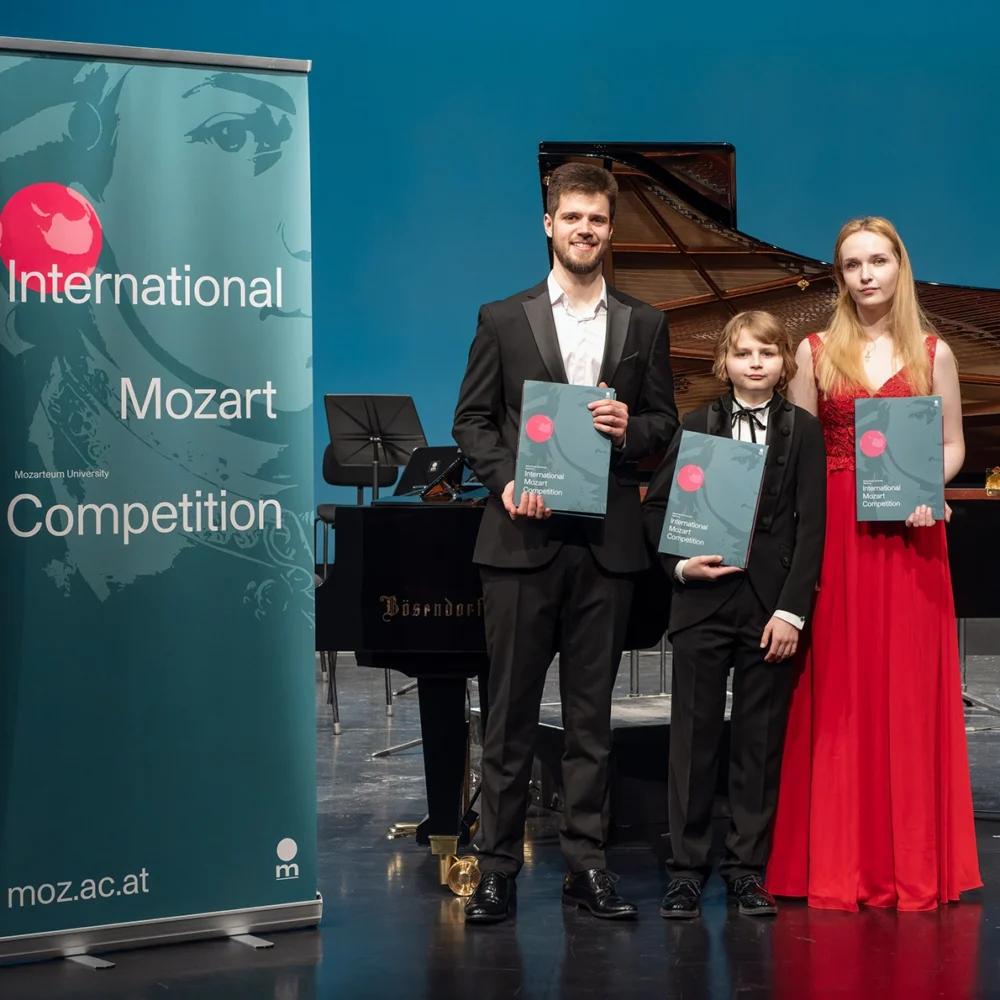
Bärenreiter donated special prizes at the International Mozart Competition in Salzburg (Photo: from left to right: Bogdan Dugalić, Elisey Mysin, Anastasiia Kliuchereva, photo: Michael Klimt)
Bärenreiter donated special prizes at the International Mozart Competition in Salzburg
A life with Bach
The 100th Volume of the Halle Handel Edition Has Been Published
 SHOP
SHOP