An Unheard “Carmen”
The new edition of Bizet’s opera Carmen in Apulia and Salzburg
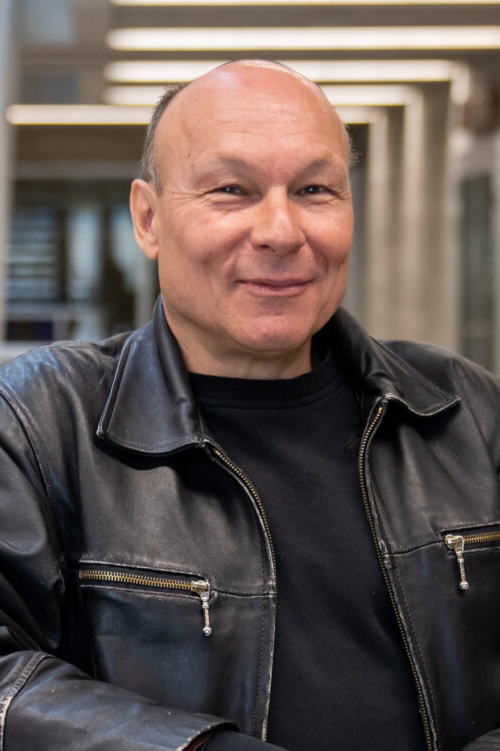
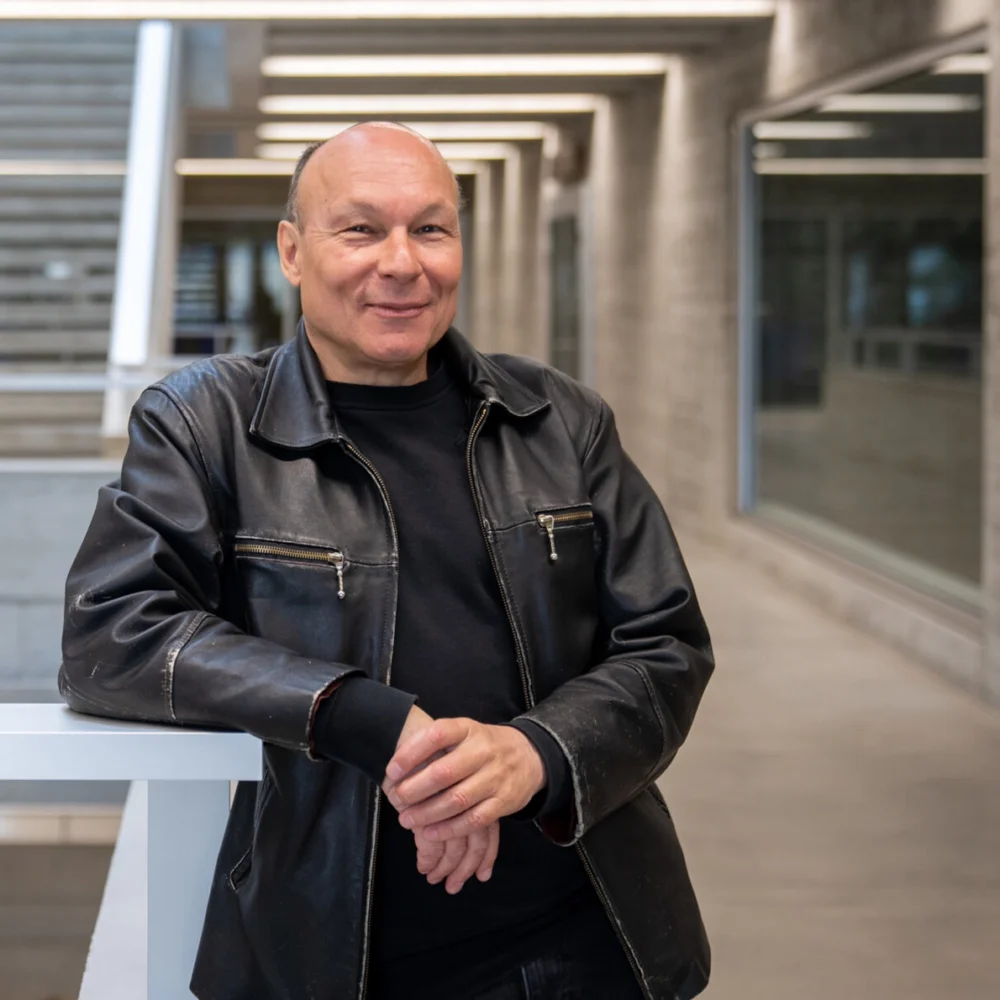
Dieter Ammann was born in Aarau in 1962. He grew up in a very musical family. After graduating from high school, he studied school music/conducting (Lucerne) and at the same time completed a course at the Swiss Jazz School in Bern. The 1980s and early 90s were characterized by Europe-wide concert activities and recordings in the field of jazz/improvised music, with artists as diverse as Eddie Harris (CD Yeah, you right) and Udo Lindenberg.
This was followed by studies in theory/composition at the Basel Music Academy (Roland Moser, Detlev Müller-Siemens) with courses with Witold Lutoslawski, Wolfgang Rihm, Dieter Schnebel and Niccolo Castiglioni.
At the age of 30, he turned to composition. Due to his scrupulous and slow approach to his work, a commissioned work can take two years or more to complete. He has received numerous national and international awards for his chamber music and orchestral works, including grants from the Aargau Board of Trustees, the Canton of Lucerne, the Franz Liszt Scholarship from the “Weimar European Capital of Culture” Foundation, the main prize from the IBLA Foundation New York (in honor of L. Berio) and the “Young composers in Europe” competition (Leipzig), the Ernst von Siemens Prize for Composition, the Swiss Music Prize and the AZ Media Prize for Culture. In 2026, he was honored with the OPUS KLASSIK award as “Composer of the Year,” with “glut – music for orchestra”.
Master classes have taken him to the universities of Cologne, Weimar, Karlsruhe, St. Petersburg, New York University, Rosario and La Plata, among others. He is in demand as a lecturer at the International Impulse Academy Graz or, together with Wolfgang Rihm, at the Composers Seminar of the Lucerne Festival Academy and leads a composition class at the Lucerne School of Music.
Ammann has received invitations as composer-in-residence to festivals such as the Davos Festival, Les Muséiques Festival, the Lucerne Festival, Wittener Tage für neue Kammermusik, Sommerliche Musiktage Hitzacker, the ReMusica Festival St. Petersburg, Tongyeong International Music Festival and the Weywuying Festival.
In addition to the renowned Swiss orchestras (Tonhalle, Philharmonia Zurich, Lucerne, Basel, Bern, Suisse Romande), his works have been performed by orchestras such as the Boston Symphony Orchestra, BBC Symphony Orchestra, Philharmonia London, Helsinki Philharmonic, Mariinsky Symphony, Munich Philharmonic, Vienna Symphony Orchestra, Munich Chamber Orchestra, DSO Berlin, WDR, Lucerne Festival Contemporary Orchestra, Klangforum Wien, Ensemble Modern Orchestra, Ensemble intercontemporain, Quatuor Diotima, Mondrian Ensemble, ensemble recherche, conducted by Pierre Boulez, George Benjamin, Jonathan Nott, Baldur Brönnimann, Sylvain Cambreling, James Gaffigan, Valery Gergiev, Pablo Heras-Casado, Susanna Mälkki, Sakari Oramo, Matthias Pintscher, Emilio Pomarico, David Robertson, Peter Rundel, Michael Sanderling, Markus Stenz, Mario Venzago and many others.
Artists such as Carolin Widmann, Andreas Haefliger, Michael Barenboim, Tabea Zimmermann, Nils Mönkemeyer, and Maximilian Hornung interpret his solo pieces and concertos.
Ammann’s works are published by Bärenreiter Verlag and Swiss Music Edition SME/musinfo.ch
| Komponist Vorname | Komponist Nachname | Titel | Datum | Orchester | Dirigent | Ort | Info |
|---|---|---|---|---|---|---|---|
| Antonio | Salieri | Cublai, gran Kan de’ Tartari | 10.08.2026 | Orchestra Haydn di Bolzano e Trento | Stefano Ferrario | La Villa (Badia) | weitere Termine |
| Hector | Berlioz | Grande messe des morts | 15.08.2026 | London Symphony Chorus and Orchestra | Antonio Pappano | London (Proms, Royal Albert Hall) | |
| Wolfgang Amadeus | Mozart | Don Giovanni | 16.08.2026 | Scottish Chamber Chorus and Orchestra | Maxim Emelyanychev | Edinburgh (International Festival) | konzertant |
| Hector | Berlioz | Grande messe des morts | 19.08.2026 | Orquesta Sinfónica de Bilbao | Erick Nielsen | San Sebastian (Musikfestivals Quincena, Auditorio Kursaal) | |
| Wolfgang Amadeus | Mozart | La finta giardiniera | 20.08.2026 | Massimiliano Caldi, Regie: Maria Sartova | Danzig | Premiere | |
| Bernd Alois | Zimmermann | Musique pour les soupers du Roi Ubu | 20.08.2026 | Orchestre des Jardins Musicaux | Valentin Reymond | Cernier | |
| Frank | Martinu | Mass for double choir a cappella | 21.08.2026 | Ensemble Aedes | Mathieu Romano | Vézelay (Basilique Sainte-Marie-Madeleine) | |
| Frank | Martinu | Mass for double choir a cappella | 22.08.2026 | La Tempête | Simon-Pierre Bestion | Souillac (Abbatiale Sainte-Marie) | weitere Termine |
| Felix | Mendelssohn Bartholdy | Die erste Walpurgisnacht | 22.08.2026 | MDR-Sinfonieorchester & MDR Chor | Josep Vila i Casanas | Jena (Volkshaus) | |
| Beat | Furrer | Canti della tenebra, In mia vita da vuolp, Presto für Flöte und Klavier, Melodie für Flöte solo, Studie für Klavier | 26.08.2026 | Elina Viluma-Helling (Sopran), Cornelia Sonnleithner (Alt), Maria Iazia (Klavier) Iva Kovac (Flöte), Gerald Preinfalk (Saxophon) | St. Gallen (Burg Gallenstein) | ||
| Joseph | Haydn | Orlando Paladino | 28.08.2026 | Orfeo Orchestra | György Vashegyi | Fertöd (Haydneum Concerts at Esterházy Palace) | |
| Anton | Bruckner | 9. Symphonie | 28.08.2026 | London Symphony Orchestra | Sir Antonio Pappano | Snape (Maltings Concert Hall) | weitere Termine |
| Hector | Berlioz | La damnation de Faust | 30.08.2026 | Choeur de Radio France, Les Siècles | Jakob Lehmann | London (BBC Proms) | konzertant |
| Joseph | Haydn | L´isola disabitata | 30.08.2026 | Orkest van de XVIIIe Eeuw | Oldenburg | ||
| Hector | Berlioz | Orphée | 01.09.2026 | Chor und Symphonisches Orchester der Opera Ballet Vlaanderen | Francesco Corti | Antwerpen | |
| Camille | Saint-Saëns | Samson et Dalila | 03.09.2026 | National Forum of Music | Thomas Guggeis | Wroclaw (Orlen Main Hall) | |
| Gustav | Holst | The Planets | 03.09.2026 | Robert Schumann Philharmonie | Benjamin Reiners | Chemnitz | |
| Anton | Bruckner | 4. Sinfonie | 08.09.2026 | Staatskapelle Berlin | Christian Thielemann | Berlin (Philharmonie) | |
| Jules | Massenet | Werther | 11.09.2026 | Marie Jacquot, Regie: Tatjana Gürbaca | Kopenhagen | Premiere | |
| Siegfried Schäfer / | Guido Masanetz | Auszüge aus Verlieb‘ dich nicht in eine Heilige/In Frisco ist der Teufel los | 11.09.2026 | Loh-Orchester Sondershausen | Annalena Hoesel | Nordhausen | konzertant, weitere Termine |
| Dieter | Ammann | pRESTO sOSTINATO | 12.09.2026 | Ensemble Modern & Ensemble TIMF | Michael Wendeberg | Tongyeong (Concert Hall) | |
| Eric | Coates | Calling All Workers | 12.09.2026 | Bad Reichenhaller Philharmoniker | Daniel Spaw | Bad Reichenhall (Königliches Kurhaus) | |
| Andreas N. | Tarkmann | Die verlorene Melodie | 12.09.2026 | Staatskapelle Weimar | Weimar (Theaterfest) | ||
| Wolfgang Amadeus | Mozart | Così fan tutte | 12.09.2026 | Sebastiano Rolli, Regie: Martina Gredler | Magdeburg | Premiere | |
| Anton | Bruckner | 3. Symphonie | 13.09.2026 | Orchestre de l'opéra de Lyon | Daniele Rustioni | Lyon | |
| Régis | Campo | Lumen | 13.09.2026 | Stuttgarter Philharmoniker | Rémy Ballot | Besancon (Festival de Musique) | |
| Arnold | Bax | Octet | 14.09.2026 | Ensemble Kontrapunkte | Gottfried Rabl | Wien (Musikverein) | |
| Dieter | Ammann | Boost | 16.09.2026 | Tonhalle-Orchester | Paavo Järvi | Zürich (Tonhalle) | |
| Anton | Bruckner | 3. Symphonie | 17.09.2026 | Essener Philharmoniker | Bertrand de Billy | Essen (Alfried Krupp Saal) | |
| Anton | Bruckner | 8. Symphonie in c-Moll | 17.09.2026 | Gewandhausorchester | Herbert Blomstedt | Leipzig (Gewandhaus) | |
| Andreas N. | Tarkmann | Na warte, sagte Schwarte | 17.09.2026 | Reinhild Köhncke (Sprecherin), Mitglieder Mecklenburgische Staatskapelle | Hang Che | Schwerin (M*Halle) | weitere Termine |
| Ambroise | Thomas | Hamlet | 18.09.2026 | Michael Schönwandt, Regie: Krzysztof Warlikowski | Paris (Opéra National) | Premiere | |
| Wolfgang Amadeus | Mozart | Così fan tutte | 19.09.2026 | Royal Northern Sinfonia | Dinis Sousa | Gateshead (The Sage) | konzertant |
| Wolfgang Amadeus | Mozart | Le nozze di Figaro | 19.09.2026 | Andreas Wolf, Regie: Walter Sutcliffe | Halle | Premiere | |
| Wolfgang Amadeus | Mozart | Die Zauberflöte | 20.09.2026 | Tarmo Peltokoski, Regie: Daniele Finzi Pasca | Zürich | Premiere | |
| Dieter | Ammann | Violation | 20.09.2026 | Tonhalle-Orchester | Julia Kurzydlak | Zürich (Tonhalle) | |
| Georges | Bizet | Carmen | 20.09.2026 | Chris Stark, Regie: Harry Fehr | London (Blackheath Halls) | Premiere | |
| Philipp | Maintz | choralvorspiel XXXIII (in te domine speravi) für orgel solo | 20.09.2026 | Roman Summereder (Orgel) | Hannover (Nazarethkirche) | Uraufführung | |
| Antonín | Dvorák | Rusalka | 22.09.2026 | Giacomo Sagripanti, Regie: Stefano Poda | Toulouse | Premiere | |
| Philipp | Maintz | choralvorspiel VIII (aus tiefer not schrei ich zu dir), choralvorspiel XL (te deum laudamus), choralvorspiel XLVI (morgenglanz der ewigkeit), choralvorspiel LI (kyrie XI, orbis factor) | 23.09.2026 | Hansjörg Albrecht (Orgel) | Berlin (Kathedrale St. Hedwig) | Uraufführung (choralvorspiel VIII) | |
| Andrea Lorenzo | Scartazzini | Brucknerblume für Orgel | 23.09.2026 | Hansjörg Albrecht (Orgel) | Berlin (Kathedrale St. Hedwig) | ||
| Hector | Berlioz | Harold en Italie | 23.09.2026 | Timothy Ridout (Viola), Scottish Chamber Choir | Maxim Emelyanychev | Perth (Concert Hall) | |
| Wolfgang Amadeus | Mozart | Mitridate, re di Ponto | 24.09.2026 | Riccardo Frizza, Regie: Claus Guth | Neapel | Premiere | |
| Andreas N. | Tarkmann | Die Prinzession auf der Erbst | 24.09.2026 | Stephan Hübner (Sprecher), Staatsorchester Darmstadt | Guillaume Fauchère | Darmstadt | auch 25.9. |
| Wolfgang Amadeus | Mozart | Die Zauberflöte | 25.09.2026 | Gianluca Martinenghi, Regie: Hugo de Ana | Sassari | Premiere | |
| Peter | Sculthorpe | Sun Music II | 25.09.2026 | Göttinger Symphonieorchester | Nicholas Milton | Göttingen (Stadthalle) | |
| Matthias | Pintscher | NUR | 25.09.2026 | Inon Barnatan (Klavier), Utah Symphony | Matthias Pintscher | Salt Lake City (Abravanel Hall) | |
| Lubica | Cekovská | At Béla's Window | 25.09.2026 | Slovak Radio Symphony Orchestra | Rastislav Štúr | Bratislava (Grand Concert Hall of Slovak Radio) | |
| Jules | Massenet | Werther | 25.09.2026 | Jakub Przybicien, Regie: Matthias Kitter | Nordhausen | Premiere | |
| Hector | Berlioz | La damnation de Faust | 26.09.2026 | Johannes Braun, Regie: Lorenzo Fioroni | Graz | Premiere | |
| Anders | Hillborg | Cello Concerto | 26.09.2026 | Ariel Barnes (Cello), Nürnberger Symphoniker | Jonathan Darlington | Nürnberg (Meistersingerhalle) | |
| Arnold | Bax | Tintagel | 28.09.2026 | Philharmonisches Orchester Bremerhaven | Florian Ludwig | Bremerhaven | |
| Beat | Furrer | Pedro Beriso | 29.09.2026 | Ulfried Staber (Bass), Gerald Preinfalk (Saxophon) | Graz (BRUSEUM/Neue Galerie) | Uraufführung | |
| Wolfgang Amadeus | Mozart | Zaide | 30.09.2026 | George Petrou, Regie: David Hermann | Frankfurt | Premiere | |
| Anton | Bruckner | 7. Symphonie | 01.10.2026 | Orchestra del Maggio Musicale Fiorentino | Thomas Guggeis | Florenz | |
| George | Benjamin | At first Light | 02.10.2026 | Ensemble Modern Akademie | Wolfenbüttel (Landesmusikakademie Niedersachsen) | ||
| Anton | Bruckner | 2. Symphonie | 02.10.2026 | Deutsche Staatsphilharmonie Rheinland-Pfalz | Christoph Eschenbach | Trier (Ehem. Reichsabtei St. Maximin) | |
| Andrea Lorenzo | Scartazzini | Einklang | 02.10.2026 | Jenaer Philharmonie | Simon Gaudenz | Jena (Volkshaus) | |
| Georges | Bizet | Carmen | 02.10.2026 | Michele Spotti, Regie: Ted Huffman | Valencia (Palau de les Arts Reina Sofia) | Premiere | |
| Wolfgang Amadeus | Mozart | Idomeneo | 02.10.2026 | Stefan Vladar, Regie: Philipp Himmelmann | Lübeck | Premiere | |
| Pietro Mascagni / | Ruggero Leoncavallo | Cavalleria Rusticana/Pagliacci | 03.10.2026 | Sebastian Lang-Lessing, Regie: Pamela Recinella | Hagen | Premiere | |
| Jules | Massenet | Werther | 03.10.2026 | Chloé Dufresne, Regie: Ted Huffman | Rennes | Premiere | |
| Umberto | Giordano | Andrea Chénier | 03.10.2026 | Daniel Cohen, Regie: John Dew | Darmstadt | Premiere | |
| Peter I. | Tschaikowsky | Dornröschen | 03.10.2026 | Carlo Benedetto Cimento, Choreographie: Reginaldo Oliveira | Palermo (Teatro Massimo) | Premiere | |
| Fromental | Halévy | La Juive | 03.10.2026 | Felix Bender, Regie: Marco Storman | Ulm | Premiere | |
| Anton | Bruckner | 5. Symphonie | 04.10.2026 | Philharmonia Orchestra | Herbert Blomstedt | London (Royal Festival Hall) | |
| Jacques | Offenbach | Les contes d'Hoffmann | 04.10.2026 | Sejoon Park, Regie: Anja Nicklich | Koblenz | Premiere | |
| Georg Friedrich | Händel | Alcina | 06.10.2026 | Emmanuelle Haim, Regie: Ewelina Marciniak | Lille | Premiere | |
| Andreas N. | Tarkmann | Wesendonck-Lieder | 08.10.2026 | Lapland Chamber Orchestra | Simon Rivard | Rovaniemi (Korundi) | |
| Manfred | Trojahn | ... mit durchscheinender Melancholie | 08.10.2026 | Hochschulorchester | Hamburg (Hochschule für Musik und Theater) | auch 9.10. | |
| Miroslav | Srnka | Superorganisms 1-4 | 09.10.2026 | Los Angeles Philharmonic | Susanna Mälkki | Los Angeles (Walt Disney Concert Hall) | |
| Georg Friedrich | Händel | Alcina | 09.10.2026 | Orchestra del Teatro di San Carlo | Iván López-Reynoso | Neapel (Teatro di San Carlo) | konzertant |
| Anton | Bruckner | 9. Symphonie | 10.10.2026 | Bamberger Symphoniker | Manfred Honeck | Bamberg (Konzerthalle) | |
| Christoph Willibald | Gluck | Orphée et Eurydice | 10.10.2026 | Alphonse Cemin, Regie: Lorraine de Sagazan | Nantes (Théâtre Graslin) | Premiere | |
| Jonathan | Harvey | Bird Concerto with Pianosong | 10.10.2026 | Antoine Francoise (Piano), Ensemble Contrechamps | Gregory Charette | Genf (Auditorium Ansermet) | |
| Peter I. | Tschaikowsky | Eugen Onegin | 10.10.2026 | Hermes Helfricht, Regie: Matthew Ferraro | Erfurt | Premiere | |
| Beat | Furrer | Herbst, Enigma I-IV & VI, Enigma V, Enigma VII | 10.10.2026 | Cantando Admont | Cordula Bürgi | Graz (Helmut List Halle) | |
| Georg Friedrich | Händel | Ottone | 11.10.2026 | Václav Luks, Regie: Jetske Mijnssen | Frankfurt | Premiere | |
| Wolfgang Amadeus | Mozart | Le nozze di Figaro | 13.10.2026 | Pablo González, Regie: Marta Pazos | Teneriffa (Auditorio) | Premiere | |
| Georg Friedrich | Händel | Riccardo primo, Re d’Inghilterra | 14.10.2026 | Les Arts Florissants | Paul Agnew | Dijon (Grand Théatre) | weitere Termine |
| Andrea Lorenzo | Scartazzini | Torso - Epitaph | 14.10.2026 | Luzerner Sinfonieorchester | Michael Sanderling | Luzern (KKL) | auch 15.10. |
| Andrea Lorenzo | Scartazzini | Brucknerblume für Orgel | 14.10.2026 | Daniel Baker (Orgel) | Luzern (KKL) | auch 15.10. | |
| Anton | Bruckner | 3. Symphonie | 15.10.2026 | Philharmonisches Orchester Erfurt | Hermes Helfricht | Erfurt | |
| Francesco | Filidei | Puccini alla caccia | 15.10.2026 | Studierende der HKB - Musik | Brian Archinal | Bern (Fachhochschule BFH) | |
| Beat | Furrer | Konzert für Klavier und Orchester | 15.10.2026 | Orquesta Sinfónica de l'ESMUC | Ernest Martínez Izquierdo | Barcelona | |
| Gioachino | Rossini | Il barbiere di Siviglia | 15.10.2026 | Chloe Rooke, Regie: Annabel Arden | Glyndebourne (Opera Festival) | Premiere | |
| Bernd Alois | Zimmermann | Musique pour les soupers du Roi Ubu | 15.10.2026 | Münchner Philharmoniker | Anja Bihlmaier | München (Isarphilharmonie) | |
| Torsten | Rasch | Die wunderbaren Jahre | 16.10.2026 | Christian Blex, Regie: Nora Bussenius | Dresden | Premiere | |
| Camille | Saint-Saëns | Samson et Dalila | 17.10.2026 | Kiril Stankow, Regie: Thomas Schmidt-Ehrenberg | Schwerin (Theaterzelt am Küchengarten) | Premiere | |
| Anton | Bruckner | 5. Symphonie | 17.10.2026 | NHK Symphony Orchestra | Matthias Bamert | Tokio (NHK Hall) | |
| Salvatore | Sciarrino | Gesualdo senza parole | 17.10.2026 | Klangforum Wien | Sylvain Cambreling | Wien (Konzerthaus) | |
| Charles | Gounod | Faust | 20.10.2026 | Daniele Rustioni, Regie: Johannes Erath | Mailand (Teatro alla Scala) | Premiere | |
| Anton | Bruckner | Symphonie f-Moll | 22.10.2026 | Symphonieorchester des Bayerischen Rundfunks | Simone Young | München (Residenz) | |
| Ruggiero | Leoncavallo | La Bohème | 22.10.2026 | Chor und Orchester der Oper Graz | Daniela Musca | Graz | konzertant |
| Dieter | Ammann | Viola Concerto „No templates“ | 23.10.2026 | John Stulz (Viola), Ensemble Intercontemporain | George Benjamin | Paris (Cité de la Musique) | |
| Georg Friedrich | Händel | Flavio, Re de’ Langobardi | 23.10.2026 | Camille Delaforge, Regie: Max Emanuel Cencic | Meiningen | Premiere | |
| Georg Friedrich | Händel | Semele | 23.10.2026 | Orchestra e Coro del Teatro Comunale di Bologna | Rinaldo Alessandrini | Bologna (Teatro Comunale) | konzertant |
| Georg Friedrich | Händel | Occasional Oratorio | 24.10.2026 | La strada armónica | Matthias Beckert | Würzburg (KdöR) | |
| Benjamin | Britten | Young Apollo | 24.10.2026 | Camerata Bern | Alexander Melnikov | Bern (Zentrum Paul Klee) | |
| Georg Friedrich | Händel | Semele | 25.10.2026 | Orchestra, Coro e Tecnici del Teatro Comunale di Bologna | Rinaldo Alessandrini | Bologna (Teatro Comunale) | |
| Arnold | Bax | Concerto for Flute, Oboe, Harp & String Quartet | 27.10.2026 | Warsaw Philharmonic Orchestra | Warschau (Chamber Music Hall) | ||
| Matthias | Pintscher | Assonanza | 29.10.2026 | Leila Josefowicz (Violine), Royal Stockholm Philharmonic Orchestra | Matthias Pintscher | Stockholm (Konserthuset) | |
| Wolfgang Amadeus | Mozart | Così fan tutte | 29.10.2026 | N.N., Regie: Nilufar K. Münzing | Klagenfurt | Premiere | |
| Dieter | Ammann | glut | 30.10.2026 | Estonian National Symphony Orchestra | Gregor A. Mayrhofer | Tallinn (Festival AFEKT, Estonia Concert Hall) | |
| Pietro Mascagni / | Ruggero Leoncavallo | Cavalleria Rusticana/Pagliacci | 31.10.2026 | Sebastian Lang-Lessing, Regie: Pamela Recinella | Hagen | Premiere | |
| Peter I. | Tschaikowsky | Schwanensee | 31.10.2026 | Camerata Louis Spohr | Bernd Peter Fugelsang | Düsseldorf | |
| Ambroise | Thomas | Hamlet | 01.11.2026 | Chelsea Opera Group | Jonathon Cole-Swinard | London (Cadogan Hall) | |
| Dieter | Ammann | Turn | 04.11.2026 | Tonhalle-Orchester | Paavo Järvi | Zürich (Tonhalle) | auch 5./6.11. |
| Christoph Willibald | Gluck | Iphigénie en Tauride | 06.11.2026 | David Bates, Regie: Lyndsey Turner | London (Coliseum) | Premiere | |
| Anton | Bruckner | 4. Symphonie | 06.11.2026 | Bamberger Symphoniker | Jakub Hrusa | Brünn (Janácek-Theater) | |
| Dieter | Ammann | glut | 06.11.2026 | hr-Sinfonieorchester | Michael Wendeberg | Frankfurt (hr-Sendesaal) | |
| Dieter | Ammann | Core | 07.11.2026 | Orchester der Oper Zürich | Gianandrea Noseda | Zürich | |
| Pietro | Mascagni | Cavalleria rusticana | 07.11.2026 | Vito Cristofaro, Regie: Gil Mehmert | Dortmund | Premiere | |
| Beat | Furrer | Neues Werk für Orchester | 07.11.2026 | Kammerorchester Basel | Pierre Bleuse | Basel (Stadtcasino) | Uraufführung |
| Hector | Berlioz | Grande messe des morts | 08.11.2026 | Wiener Symphoniker | Maxime Pascal | Wien (Musikverein) | |
| Engelbert | Humperdinck | Dornröschen | 08.11.2026 | Markus Poschner, Regie: Anna Bergmann | Hamburg | Premiere | |
| Wolfgang Amadeus | Mozart | La clemenza di Tito | 13.11.2026 | Ottavio Dantone, Regie: Chiara Muti | Ravenna (Ravenna Festival) | Premiere | |
| Camille | Saint-Saëns | Samson et Dalila | 13.11.2026 | Orchestra e Coro del Teatro Comunale di Bologna | Roberto Abbado | Bologna (Teatro Comunale) | konzertant |
| Hector | Berlioz | Orphée | 14.11.2026 | Antony Walker, Regie: José Maria Condemi | Pittsburgh (Byham Theater) | Premiere | |
| Wolfgang Amadeus | Mozart | Die Zauberflöte | 14.11.2026 | Ottavio Dantone, Regie: Chiara Muti | Ravenna (Ravenna Festival) | Premiere | |
| Wolfgang Amadeus | Mozart | Le nozze di Figaro | 14.11.2026 | Danyil Ilkiv, Regie: Marijke Malitius | Passau | Premiere | |
| Beat | Furrer | a sei voci für 6 Frauenstimmen | 15.11.2026 | Cantando Admont | Cordula Bürgi | Münchendorf (Musiksalon) | |
| Anton | Bruckner | 4. Symphonie | 18.11.2026 | HSO Hochschulsinfonieorchester | Roland Kluttig | Dresden (Hochschule für Musik) | |
| Georg Friedrich | Händel | Agrippina | 21.11.2026 | Gerd Amelung, Regie: Claudia Isabel Martin | Heidelberg | Premiere | |
| Václav | Trojan | Märchen | 21.11.2026 | Kammerorchester der TUD | Florian Streich | Groß-Umstadt (Stadthalle) | |
| Wolfgang Amadeus | Mozart | Le nozze di Figaro | 21.11.2026 | Hélio Vida, Regie: Nikolaus Habjan | Basel | Premiere | |
| Henry | Purcell | Dido and Aeneas | 21.11.2026 | Daniel Geiss, Regie: Seollyeon Konwitschny-Lee | Neubrandenburg | Premiere | |
| Wolfgang Amadeus | Mozart | La clemenza di Tito | 25.11.2026 | David McVicar, Regie: Bettina Neuhaus | Barcelona | Premiere | |
| Wolfgang Amadeus | Mozart | Don Giovanni | 26.11.2026 | Hungarian Philharmonic Orchestra | Giancarlo Andretta | Budapest (Müpa) | konzertant |
| Georg Friedrich | Händel | Agrippina | 27.11.2026 | Constantin Trinks, Regie: Walter Sutcliffe | Sofia | Premiere | |
| Georg Friedrich | Händel | Agrippina | 28.11.2026 | Jinie Ka, Regie: Gregor Horres | Linz (Black Box Musiktheater) | Premiere | |
| Andreas N. | Tarkmann | Das Mondklavier | 29.11.2026 | Beate Bachmann (Sprecherin), Jenaer Philharmonie | Jena (Volkshaus) | ||
| Giovanni | Sollima | Violoncelles, vibrez! | 02.12.2026 | Münchener Kammerorchester | Daniel Giglberger | Olten (Stadttheater) | |
| Dieter | Ammann | Gehörte Form - Hommages | 03.12.2026 | Trio Sola | Zürich (Tonhalle) | ||
| Georges | Bizet | Les Pêcheurs de Perles | 05.12.2026 | Marc Minkowski, Regie: Pierre-André Weitz | Paris (Théâtre des Champs-Elysées) | Premiere | |
| Andreas N. | Tarkmann | Nils Holgersson | 06.12.2026 | Erik Brünner (Sprecher), Jugendsinfonieorchester Heinrich-Schütz-Konservatorium, Dresdner Philharmonie | Milko Kersten | Dresden (Kulturpalast) | auch 7.12. |
| Francesco | Filidei | I funerali dell’anarchico Serantini | 09.12.2026 | Studierende der Hochschule | Karlsruhe (Hochschule für Musik) | ||
| Miroslav | Srnka | Smoke | 10.12.2026 | NHK Symphony Orchestra | Maxim Emelyanychev | Tokio (Suntory Hall) | Uraufführung |
| Wolfgang Amadeus | Mozart | Le nozze di Figaro | 13.12.2026 | Marta Gardolinska, Regie: Jetske Mijnssen | Genf (Bâtiment des Forces Motrices) | Premiere | |
| Hector | Berlioz | La damnation de Faust | 17.12.2026 | Bertrand de Billy, Regie: Lydia Steier | Wien (Staatsoper) | Premiere | |
| Wolfgang Amadeus | Mozart | Così fan tutte | 18.12.2026 | Felix Bender, Regie: David Bösch | Ulm | Premiere | |
| Jules | Massenet | Thaïs | 18.12.2026 | Pierre Dumoussaud, Regie: Olivier Lepelletier-Leeds | Liège | Premiere | |
| Georg Friedrich | Händel | Flavio, Re de’ Langobardi | 19.12.2026 | Karsten Januschke, Regie: Tilmann Köhler | Frankfurt (Bockenheimer Depot) | Premiere | |
| Georges | Bizet | Les Pêcheurs de Perles | 29.12.2026 | Victorien Vanoosten, Regie: Mirabelle Ordinaire | Toulon (Zénith) | Premiere | |
| Wolfgang Amadeus | Mozart | Thamos, König in Ägypten | 12.01.2027 | Orchestra Haydn di Bolzano e Trento | Christophe Rousset | Bozen (Auditorium) | |
| Dieter | Ammann | glut | 13.01.2027 | Tonhalle-Orchester | Gianandrea Noseda | Zürich (Tonhalle) | |
| Jules | Massenet | Werther | 16.01.2027 | Staatsphilharmonie Nürnberg | Christopher Schumann | Nürnberg | konzertant |
| Wolfgang Amadeus | Mozart | La clemenza di Tito | 19.01.2027 | Stefano Montanari, Regie: Rafael R. Villalobos | Valencia | Premiere | |
| Richard | Dubugnon | Sonnenring | 20.01.2027 | Janine Jansen (Violine), Orchestre de la Suisse Romande | Jonathan Nott | Genf (Victoria Hall) | |
| Georg Friedrich | Händel | Orlando | 21.01.2027 | Daniel Espasa, Regie: Rafael Villalobos | Teneriffa (Auditorio) | Premiere | |
| Antonín | Dvorák | Rusalka | 23.01.2027 | Francesco Angelico, Regie: Vasily Barkhatov | Graz | Premiere | |
| Christoph Willibald | Gluck | Orfeo ed Euridice | 23.01.2027 | Eric Staiger, Regie: Aileen Schneider | Oldenburg | Premiere | |
| Engelbert | Humperdinck | Königskinder | 23.01.2027 | Markus Poschner, Regie: Paul-Georg Dittrich | Linz | Premiere | |
| Giovanni | Sollima | When We Were Trees | 24.01.2027 | Südwestdeutsches Kammerorchester | Reto Bieri | Pforzheim (CongressCentrum) | |
| Andreas N. | Tarkmann | Nils Holgersson | 24.01.2027 | Oliver Moumouris (Sprecher), Württembergische Philharmonie | Hans Grischkat | Reutlingen (Georgensaal) | |
| Manfred | Trojahn | Abendröthe | 28.01.2027 | Christian Gerhaher (Bariton), Gerold Huber (Piano) | Kronberg (Kronberg Academy, Casals Forum) | auch 4.2. München | |
| Benjamin | Britten | Young Apollo | 29.01.2027 | Dresdner Philharmonie | Donald Runnicles | Dresden (Kulturpalast) | |
| Christoph Willibald | Gluck | Orfeo ed Euridice | 29.01.2027 | Kirill Gerstein (Klavier), Dresdner Philharmonie | Aapo Häkkinen, Regie: Tero Saarinen | Helsinki | Premiere |
| Engelbert | Humperdinck | Königskinder | 30.01.2027 | Justus Thorau, Regie: Angela Denoke | Saarbrücken | Premiere | |
| Antonín | Dvorák | Rusalka | 30.01.2027 | Jiri Rozen, Regie: Caterina Cianfarini | Basel | Premiere | |
| Wolfgang Amadeus | Mozart | Le nozze di Figaro | 30.01.2027 | Marco Alibrando, Regie: Marcos Darbyshire | Weimar | Premiere | |
| Peter I. | Tschaikowsky | Eugen Onegin | 05.02.2027 | Felix Bender, Regie: Benjamin Künzel | Ulm | Premiere | |
| Wolfgang Amadeus | Mozart | Don Giovanni | 05.02.2027 | Václav Luks, Regie: Jiri Herman | Brünn (Janácek-Theater) | Premiere | |
| Wolfgang Amadeus | Mozart | La clemenza di Tito | 05.02.2027 | John Warner, Regie: Krystian Lader | Gelsenkirchen | Premiere | |
| Jean-Philippe | Rameau | Les Boréades | 05.02.2027 | Camille Delaforge, Regie: R.B. Schlather | Dublin (Irish National Opera) | Premiere | |
| Anton | Bruckner | 8. Symphonie | 06.02.2027 | Gewandhausorchester | Christoph Gedschold | Leipzig (Opernhaus) | |
| Wolfgang Amadeus | Mozart | Così fan tutte | 10.02.2027 | Thomas Hengelbrock, Regie: Netia Jones | London (Royal Opera House) | Premiere | |
| Jules | Massenet | Werther | 11.02.2027 | Nathalie Stutzmann, Regie: Robert Carsen | Paris (Opéra National) | Premiere | |
| Frank | Martinu | Mass for double choir a cappella | 11.02.2027 | BBC Singers and Edvard Grieg Kor | Daniel Hyde | Bergen (Grieghallen) | |
| Henry | Purcell | Dido and Aeneas | 13.02.2027 | Lorenz Höß, Regie: Markus Dietze | Koblenz | Premiere | |
| Wolfgang Amadeus | Mozart | Don Giovanni | 13.02.2027 | Gerrit Prießnitz, Regie: Anna-Sophie Mahler | Innsbruck | Premiere | |
| Camille | Saint-Saëns | Samson et Dalila | 13.02.2027 | Marco Comin, Regie: N.N. | Bremerhaven | Premiere | |
| Ludwig van | Beethoven | Fidelio | 17.02.2027 | Kensho Watanabe, Regie: Ruth Knight | Glasgow | Premiere | |
| Georg Friedrich | Händel | Samson | 18.02.2027 | Monteverdi Chor, Lautten Compagney | Antonius Adamske | Hamburg (Elbphilharmonie) | |
| Georg Friedrich | Händel | Rinaldo | 22.02.2027 | Philippe Jaroussky, Regie: Valentina Carrasco | Paris (Théâtre des Champs-Elysées) | Premiere | |
| Frank | Martinu | Mass for double choir a cappella | 26.02.2027 | Estonian Philharmonic Chamber Choir | Tõnu Kaljuste | Rotterdam (de Doelen) | weitere Termine |
| Dieter | Ammann | unbalanced instability für Violine und Kammerorchester | 25.02.2027 | Carolin Widmann (Violine), Tonhalle-Orchester | Hannu Lintu | Zürich (Tonhalle) | |
| Oliver | Leith | Last Days | 27.02.2027 | André de Ridder, Friedrike Scheunchen, Regie: Lily Kuhlmann | Freiburg | Premiere | |
| Bedrich | Smetana | Die verkaufte Braut | 28.02.2027 | Tómas Netopil, Regie: Laurent Pelly | Köln | Premiere | |
| Wolfgang Amadeus | Mozart | Le nozze di Figaro | 05.03.2027 | Kaspar Zehnder, Regie: Joel Lauwers | Metz | Premiere | |
| Georg Friedrich | Händel | Serse | 06.03.2027 | Clément Lonca, Regie: Lorenzo Fioroni | Bern | Premiere | |
| Ambroise | Thomas | Hamlet | 07.03.2027 | Seok-Won Hong, Regie: Nicola Berloffa | Teneriffa (Auditorio) | Premiere | |
| Andreas N. | Tarkmann | König Karotte | 11.03.2027 | Stephan Hübner (Sprecher), Staatsorchester Darmstadt | Darmstadt | ||
| Georg Friedrich | Händel | Rinaldo | 14.03.2027 | Philippe Jaroussky, Regie: Valentina Carrasco | Zürich | Premiere | |
| Bohuslav | Martinu | Konzert Nr. 2 für Violine und Orchester | 15.03.2027 | Kirill Kobantschenko (Violine), Sinfonia Academica | David Holzinger | Wien (Mozartsaal) | |
| Christoph Willibald | Gluck | Iphigénie en Aulide | 20.03.2027 | Ivan Demidov, Regie: Jochen Biganzoli | Augsburg | Premiere | |
| Charles | Gounod | Faust | 23.03.2027 | Orchestre Symphonique de la Garde républicaine | Bastien Stil | Paris (Théâtre des Champs-Élysées) | konzertant |
| Lubica | Cekovská | Toy Procession for orchestra | 08.04.2027 | Bamberger Symphoniker | Juraj Valcuha | Fulda (Schlosstheater) | auch 10./11.4. Bamberg |
| Georg Friedrich | Händel | Rinaldo | 09.04.2027 | Francesco Corti, Regie: Nadja Loschky | Wien (Theater an der Wien) | Premiere | |
| Wolfgang Amadeus | Mozart | Don Giovanni | 10.04.2027 | Levente Török, Regie: Rahel Thiel | Aachen | Premiere | |
| Andreas N. | Tarkmann | Die verlorene Melodie | 11.04.2027 | Stephan Hübner, Sprecher / Jenaer Philharmonie | Arturs Oskars Mitrevics | Jena (Volkshaus) | |
| Wolfgang Amadeus | Mozart | La clemenza di Tito | 16.04.2027 | N.N., Regie: Hinrich Horstkotte | Meiningen | Premiere | |
| Francesco | Cilèa | L'Arlesiana | 17.04.2027 | Staatskapelle Weimar | Daniel Carter | Weimar | konzertant |
| Bedrich | Smetana | Die verkaufte Braut | 17.04.2027 | N.N., Regie: Maren Schäfer | Krefeld | Premiere | |
| Hector | Berlioz | Orphée | 20.04.2027 | Speranza Scapucci, Regie: Ted Huffman | Paris (Théâtre des Champs-Elysées) | Premiere | |
| Andreas N. | Tarkmann | Die Prinzessin auf der Erbse | 21.04.2027 | Antje Horn (Erzählerin), Meininger Hofkapelle | Meiningen | ||
| Antonín | Dvorák | Rusalka | 23.04.2027 | Daniel Inbal, Regie: Kai Anne Schuhmacher | Pforzheim | Premiere | |
| Lubica | Cekovská | Toy Procession for orchestra | 23.04.2027 | Utah Symphony | Ludovic Morlot | Salt Lake City (Abravanel Hall) | auch 24.4. |
| Georg Friedrich | Händel | Alcina | 24.04.2027 | Pedro Beriso, Regie: Maria Chagina | St. Gallen | Premiere | |
| Ferdinando | Paer | Leonora | 24.04.2027 | Giulio Cilona, Regie: Andrea Moses | Dresden (Semperoper) | Premiere | |
| Georges | Bizet | Carmen | 25.04.2027 | Yorgos Ziavras, Regie: Greg Eldridge | Wuppertal | Premiere | |
| Wolfgang Amadeus | Mozart | Don Giovanni | 30.04.2027 | Gabriel Venzago, Regie: Jan Eßinger | Mainz | Premiere | |
| Engelbert | Humperdinck | Königskinder | 01.05.2027 | Christian Thielemann, Regie: David Bösch | Berlin (Staatsoper unter den Linden) | Premiere | |
| Wolfgang Amadeus | Mozart | La clemenza di Tito | 02.05.2027 | Pavel Baleff, Regie: Jean-Philippe Clarac & Olivier Deloeuil | Limoges | Premiere | |
| Matthias | Pintscher | NUR | 05.05.2027 | Realtime Orchester | Mercedes Diaz Garcia | Bremen (Theater am Leipnizplatz) | |
| Wolfgang Amadeus | Mozart | Die Entführung aus dem Serail | 07.05.2027 | Kaspar Zehnder, Regie: Florent Siaud | Avignon | Premiere | |
| Georg Friedrich | Händel | Alcina | 08.05.2027 | Alessandro Quarta, Regie: Felix Seiler | Kiel | Premiere | |
| Wolfgang Amadeus | Mozart | Die Zauberflöte | 15.05.2027 | Vito Cristofaro, Regie: Georg Heckel | Oldenburg | Premiere | |
| Leos | Janácek | Glagolitische Messe | 20.05.2027 | Prager Philharmonischer Chor, Dresdner Philharmonie | David Robertson | Dresden (Kulturpalast) | |
| Andreas N. | Tarkmann | Jack und die Bohnenranke | 22.05.2027 | Elke Kottmair (Sprecherin), Kärntner Sinfonieorchester | N.N. | Klagenfurt | |
| Dieter | Ammann | Le réseau des reprises | 27.05.2027 | Tonhalle-Orchester | Cristian Macelaru | Zürich (Tonhalle) | |
| Wolfgang Amadeus | Mozart | Don Giovanni | 28.05.2027 | Corinna Niemeyer, Regie: Andrea Bernard | Lausanne | Premiere | |
| Robert | Oboussier | Amphitryon | 29.05.2027 | Daniel Carter, Regie: Kerstin Steeb | Weimar | Premiere | |
| Hector | Berlioz | La damnation de Faust | 05.06.2027 | Sébastien Rouland, Regie: Pierre-Emmanuel Rousseau | Saarbrücken | Premiere | |
| Wolfgang Amadeus | Mozart | Le nozze di Figaro | 05.06.2027 | Maximilian Otto, Regie: Nilufar K. Münzing | Chemnitz | Premiere | |
| Ludwig van | Beethoven | Leonore (1805) | 13.06.2027 | Chorwerk Ruhr, Dresdner Philharmonie | Dorothee Oberlinger | Dresden (Kulturpalast, Musikfestspiele Potsdam Sanssouci) | |
| Camille | Saint-Saëns | Samson et Dalila | 13.06.2027 | Gianandrea Noseda, Regie: Evgeny Titov | Zürich | Premiere | |
| Wolfgang Amadeus | Mozart | Don Giovanni | 16.06.2027 | Kyrian Friedenberg, Regie: Jean-Yves Ruf | Châteauvallon | Premiere | |
| Lubica | Cekovská | Sanctus Adalbertus Oratorio | 16.06.2027 | Slovak Philharmonic Choir, Prague Symphony Orchestra | Tomáš Netopil | Prag (Municipal house) | Uraufführung, auch 20.6. Litomyšl |
| Christoph Willibald | Gluck | Alceste | 25.06.2027 | Titus Engel, Regie: Milo Rau | Stuttgart | Premiere |
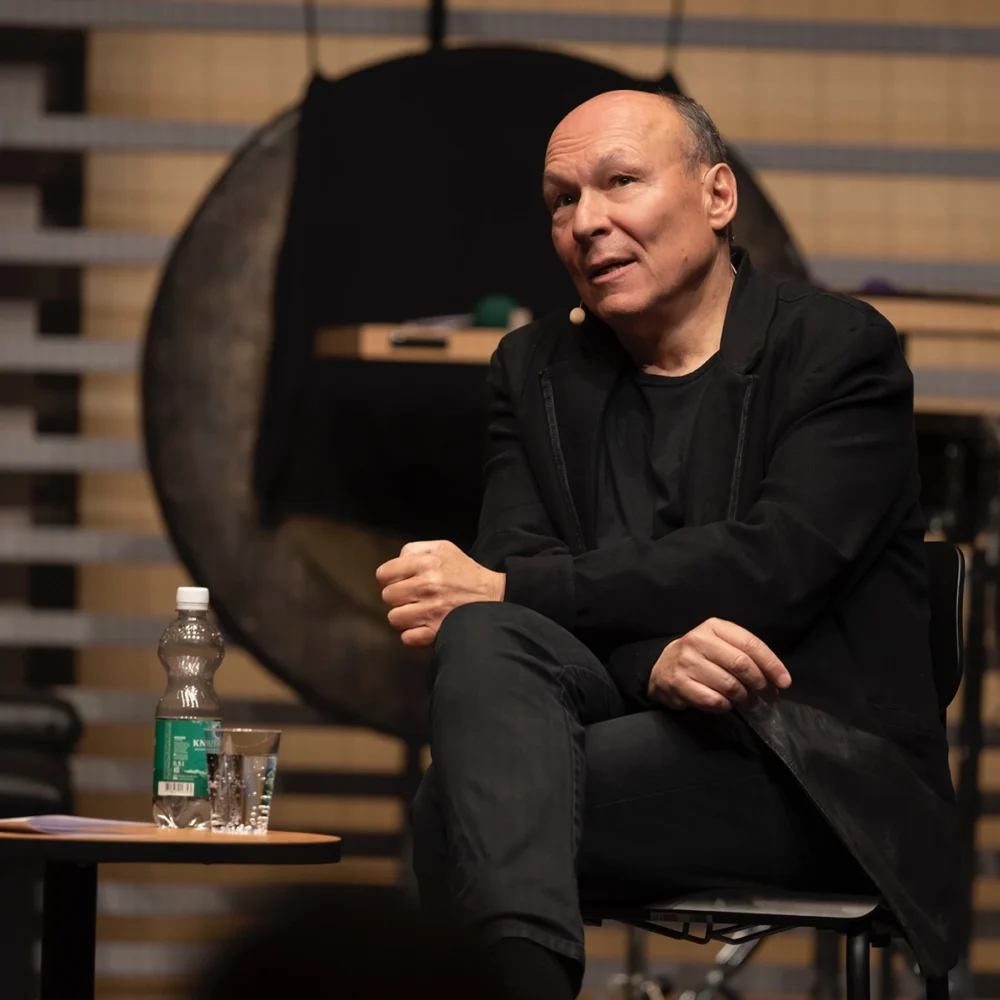
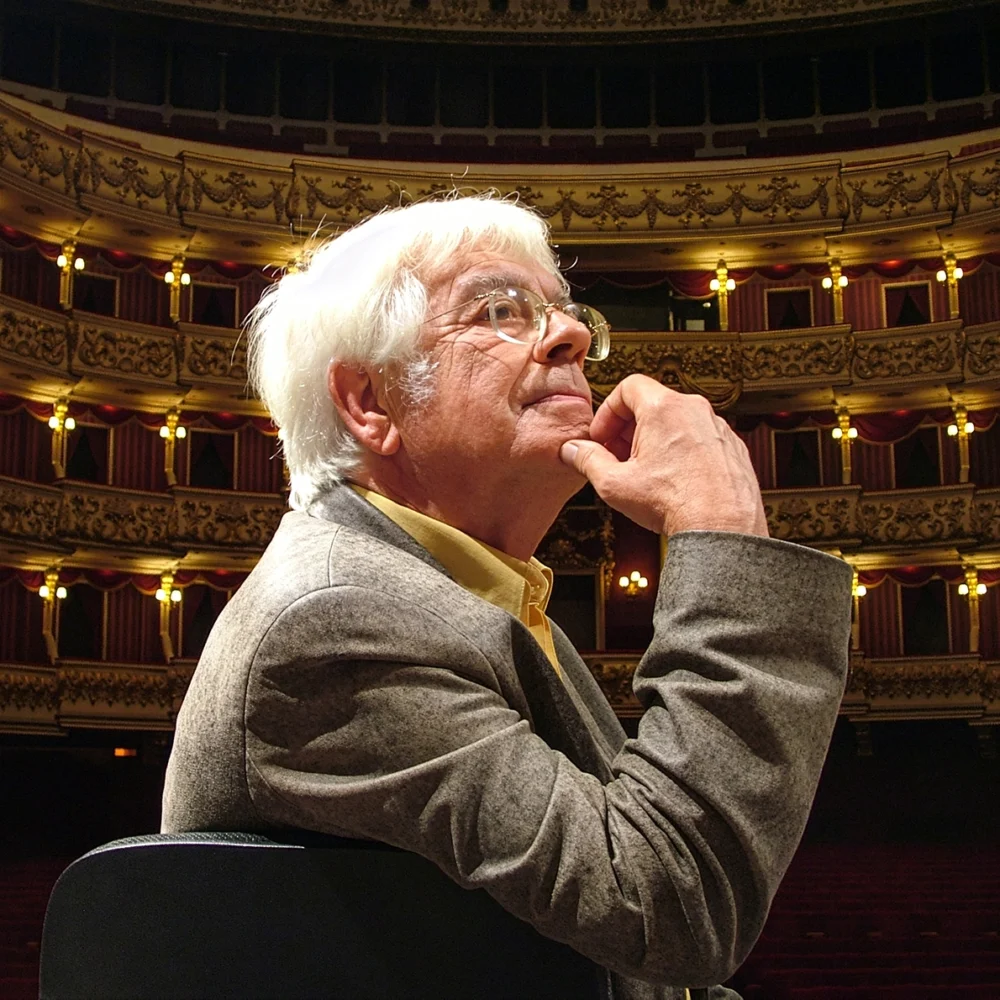
The Swiss composer Dieter Ammann
takte: Dieter Ammann, what are the most important works you have composed to date? Have there been stages or turning points in your composing?
Ammann: I must begin by saying that it is important to me to develop a personal style, naturally not in order to repeat oneself, but rather in order to find a way in one’s chosen direction. There are a few turning points: one was after the first two pieces which were still characterised by serial thinking, “Developments” (1993) and “piece for cello” (1994/1998). In the cello piece the pitches are still treated very strictly, however, I was already working intuitively both rhythmically and in instrumental colour. And in its use of pitch, “Regard sur les traditions“ (1995) can also be easily explained. After that, it became more and more intuitive. In “The Freedom of Speech“ (1995/96), this freedom was already on the agenda, although the title is also concerned with the death of my father. Here for the first time, I have chosen a route which is sometimes laborious, of composing the introduction and developing what follows out of it.
Then for me, there are pieces where I’ve personally progressed: firstly ”Gehörte Form – Hommages“ (1998). I had seven months to work on this in Weimar, and this is reflected in the time dimensions and the tonal elaboration of these three string instruments. The next steps came a little later with “Violation“ (1998/99), where the relationship between solo instruments and ensemble was a central theme. Then come three orchestral pieces: in “Boost“ (2000/01), I unambiguously referred to “Grooves“ (2000), and in “Core“ (2002) I again referred to Boost. Finally, in the piano trio “Après le silence“ (2004/05) I have pushed the boundaries even further in the breadth of expression. Then bringing these extremes together under an arch, without the music dividing up, was a step forwards for me.
You’ve used terms such as scene change, that’s to say, you’ve used theatrical terms to describe your music. Many composers take literary works as inspiration, or works of fine art for the structure or emotional themes. Do you have such interests?
For me, music for me is exactly the medium which doesn’t need to convey any content apart from itself. I therefore don’t take such stimuli as my starting point. What I attempt is to translate my acoustic concept into a form which is also meaningful, or at least stimulating, for others. These are always pure acoustic perceptions, inherent musical events.
In your music, you frequently develop extreme contrasts of tension, juxtapose structures which form a rapid interplay – for instance between very energetic, eventful and very peaceful zones, and these build up from extremely complex stratified individual events.
This is connected with my personal fondness for fashioning from musical processes. I’m an impatient person and like it when I’m surprised, when as a listener, I’m alternately thrown onto a roller coaster of musical events and am carried away by it. Music which grabs my attention means more to me than something where I have to open seventeen doors before I can find out what it’s about, what the composer’s on about. That’s to say, when I write, then it’s always also for me as a listener, but that’s naturally a subjective process. At any rate, this curiosity and impatience has led to the fact that, with the exception of two pieces, I have stopped working with a material in long processes and examining it in all its facets. It’s much more the case that certain rules which I give myself, only apply selectively from time to time. When I notice that I would prefer a quite different acoustic outcome, I take some time off and modify or abandon the material. On the one hand this is a liberation, on the other hand you can’t hide behind the academic art of material treatment and illumination, because you have to decide make your own mind up whether this idea, this sound visualisation stands up to scrutiny and justifies itself. These are extremely subjectively located tonal concepts, which I then attempt to portray in a material most suitable to this concept. Therefore there are also tonal shapes in my mind, sometimes spaces in which dissonance and consonance are distinguishable – then once again the complete chromatic range up to quarter tones, which I then interpret as a further differentiation of the chromatic. I find it exciting to shape something direct, something haptic, and despite that to create musical depth in the spatial sense, so that with repeated listening you can perceive things behind it, which you were completely unaware of at first hearing.
People probably often ask you about your interest in jazz. It’s clear that improvising is something other than composing. Despite that, there are indeed connections.
Through my father, who was a scientist and teacher, my approach to music was firstly through playing, then through listening. And even now, notation is always a distraction for me. I believe I have a different relationship to rhythmic aspects. There has been, and still is, a great deal of new music which is never allowed to pulsate. I no longer know exactly which composer made the remark that the problem with new music was that everything was rubato. In addition to this, people can tell my background as a performing musician from my treatment of instruments. It is important to me that, although the boundaries are tested in terms of playing technique, the music remains realisable. At the same time I have noticed that my intention very often coincides with the technical possibilities of the instrument, that I somehow feel and think out of the instrument. A characteristic of improvised music is also, that at almost every moment it is constructed as a dialogue. I also try to realise this principle of action-reaction in composed music between instrumental groups or individual instruments, and perhaps it also seems to be so lively for that reason.
Finally, a very general question: do you need to compose?
I actually began to compose because of an enquiry I received. I would never write without a commission. But, when I compose, I am so engrossed in it that a piece runs through my life for months, like a leitmotif. It can happen that I work for a year on fifteen minutes of music. I’m also a family man, love my children and wife very much, and am happy teaching. But when I compose, I can enter into a sound world for months, and meanwhile, I have a great need for that. Something else should be mentioned: I have the feeling that I have something to say in composed music, which others would say differently, or not say at all. I believe that I have something to contribute there, which is worth devoting myself to for the rest of my life. Indeed, I wasn’t a composer in the strict sense of the word until I was thirty years old, rather I was an interpreter, an instrumentalist. Naturally I developed pieces in bands, but that’s something other than “academic composing”. Here is something independent, which really contains something of me, something personal.
A brief look ahead: what are your next projects?
In the next few months, I’ll be busy on my second string quartet. In addition, my teaching commitments at the Musikhochschulen in Lucerne and Berne absorb a lot of time and energy. In spring 2009 I’ve accepted an invitation to be composer-in-residence at the Swiss festival ”les muséiques” and I’ll also be presenting my work as a musician in the Freefunk area. For 2010 another invitation from a major festival is lined up. With the commissioned work associated with this, I’m taking on a compositional task which I’ve already had in mind for a long time: to write a piece for orchestra which is calm for most of the time, and which is capable of forming a convincing trilogy with my two orchestral works Boost and Core.
In conversation with Marie Luise Maintz
from: takte 2/2008
The new edition of Bizet’s opera Carmen in Apulia and Salzburg
Dieter Ammann – Creative Chair in Zurich and Opus Klassik
Bärenreiter Special Prizes at the Göttingen Handel Competition
Ľubica Čekovská‘s opera “Dorian Gray” in Annaberg-Buchholz
The Swiss composer is composer-in-residence
Bärenreiter awards a special prize at the Bach Competition, Leipzig
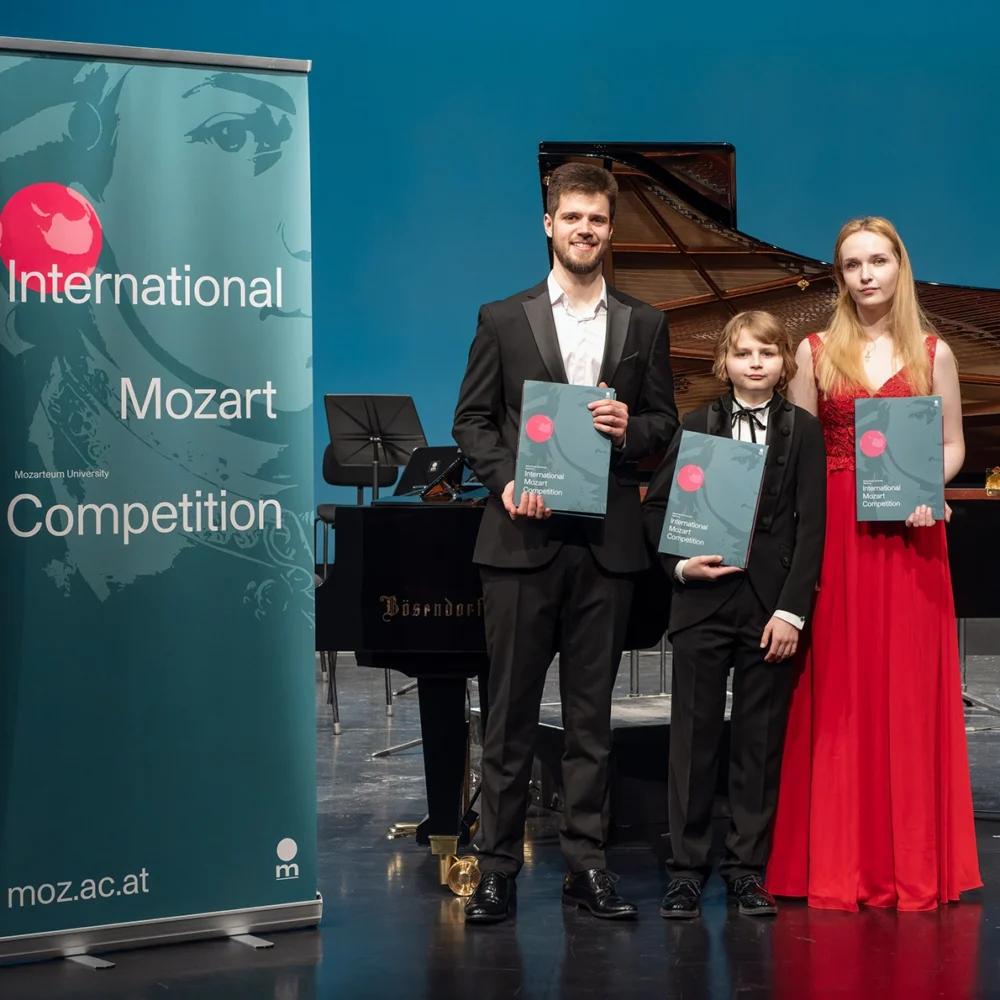
Bärenreiter donated special prizes at the International Mozart Competition in Salzburg (Photo: from left to right: Bogdan Dugalić, Elisey Mysin, Anastasiia Kliuchereva, photo: Michael Klimt)
Bärenreiter donated special prizes at the International Mozart Competition in Salzburg
A life with Bach
The 100th Volume of the Halle Handel Edition Has Been Published
 SHOP
SHOP