
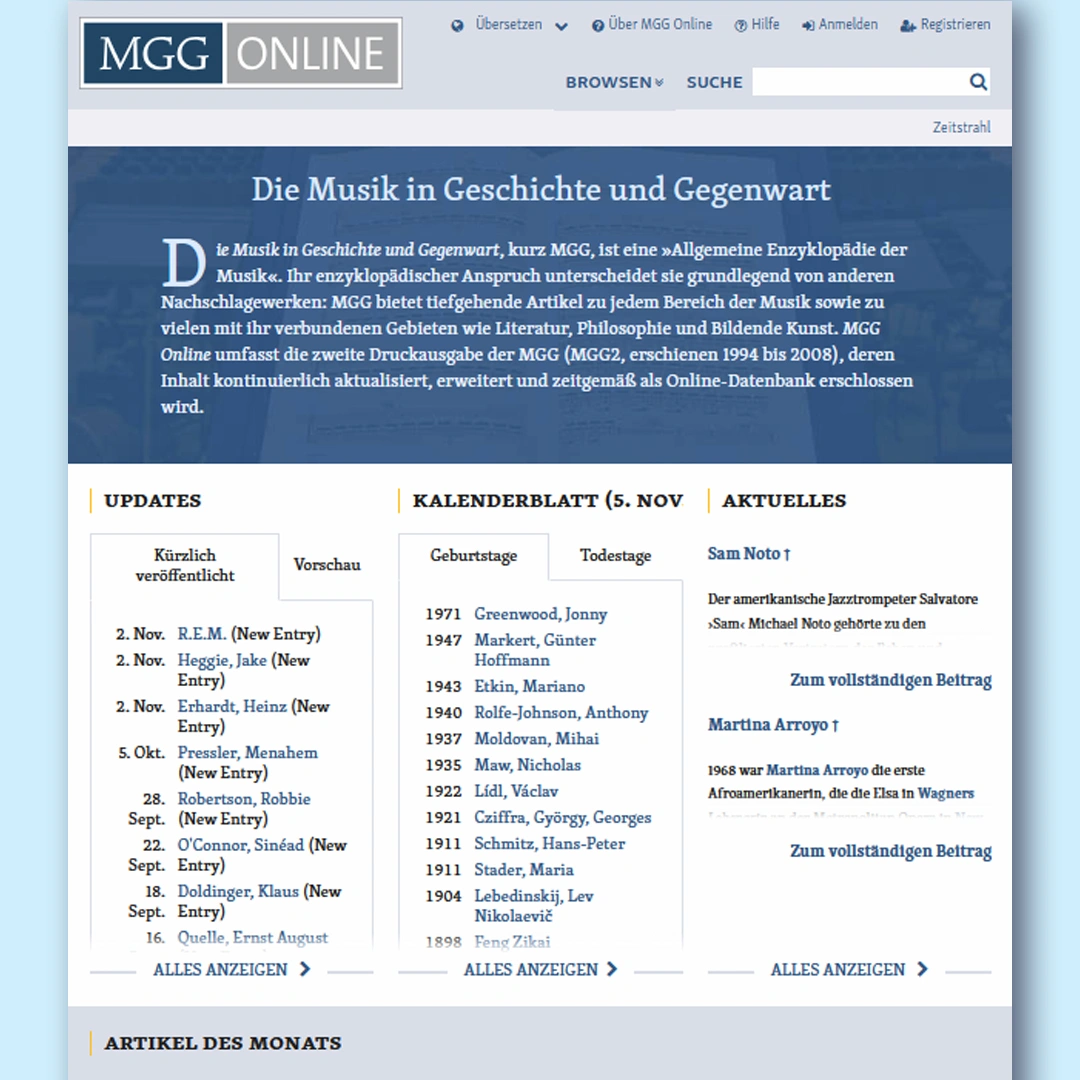
10 Years of MGG Online
Musical knowledge with a history and a future
On 4 November 2016, MGG Online was unveiled to the public at the annual meeting of the American Musicological Society in Vancouver and went live during the presentation itself. Ten years later, the digital edition of “Musik in Geschichte und Gegenwart” (MGG) has become an indispensable resource for musicologists around the world. Yet its history stretches back well beyond the digital age.
From a printed encyclopaedia to a digital treasure trove of knowledge
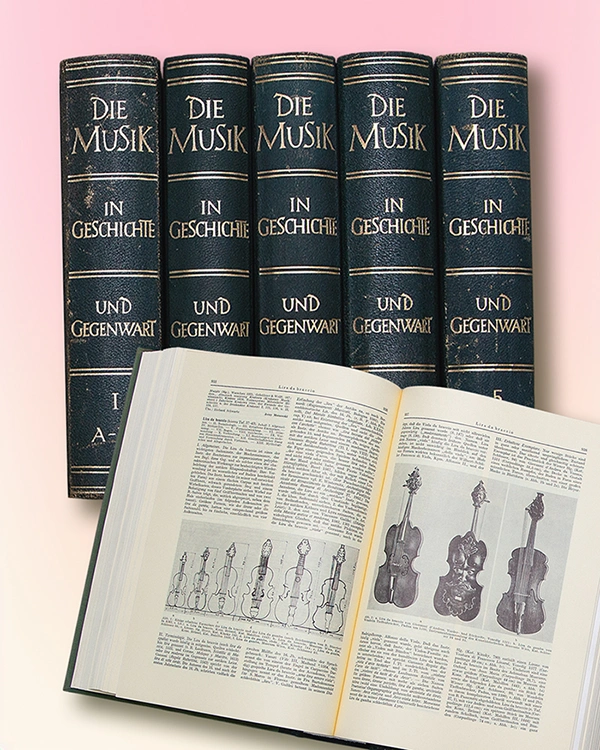
The first volume of MGG, edited by Friedrich Blume, was published in 1949. This ambitious undertaking grew into one of the world’s most important reference works in musicology.
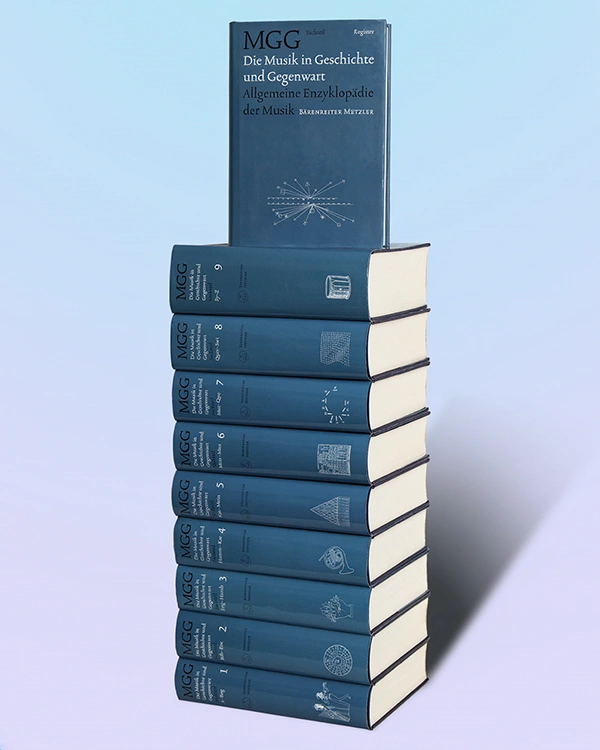
With the second edition, edited by Ludwig Finscher and published by Bärenreiter and J. B. Metzler between 1994 and 2008, the work was fundamentally revised and expanded. In addition to classical music, greater emphasis was placed on fields of research such as jazz, pop and rock music, ethnomusicology and non-European musical cultures.
Digitisation ultimately opened up new possibilities. In collaboration with the Répertoire International de Littérature Musicale (RILM), Bärenreiter and J. B. Metzler developed MGG Online. Since its launch in November 2016, the encyclopaedia has no longer been constrained by the limits of printed volumes.
An encyclopaedia that grows with research
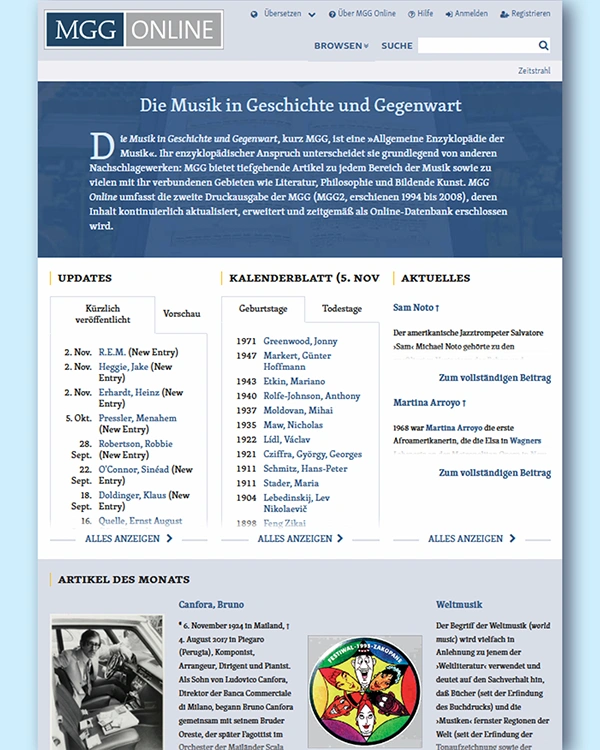
Today, MGG Online comprises more than 19,000 articles on individuals, periods, genres, instruments, institutions and virtually every area of music history and musicology.
Unlike a definitive printed reference work, the digital encyclopaedia is continuously evolving. Each year, 100 new, fundamentally revised, or comprehensively updated articles are added, alongside numerous smaller updates. New areas of research and findings are incorporated, as are developments in the contemporary musical landscape.
Under the direction of Editor-in-Chief, Prof. Dr Laurenz Lütteken, and in collaboration with the editorial team and an international academic advisory board, the body of articles is systematically expanded and updated. Throughout this process, the high scholarly and editorial standards of the printed editions are maintained.
With its extensive search functions, cross-referencing of related content and multilingual interface, MGG Online makes this wealth of knowledge accessible to the international research community in a format suited to the digital age.
Reliable Knowledge in a Digital World
How can reliable knowledge be ensured in an age when information is available anytime and anywhere, and is changing at an ever-increasing pace?
This question was the focus of an interdisciplinary symposium held on 30 September 2026 in Frankfurt am Main as part of the annual conference of the Gesellschaft für Musikforschung, to mark the tenth anniversary of MGG Online.
Under the title “Alles im Fluss? – Gesichertes Wissen in der digitalen Wirklichkeit” (Everything in Flux? – Reliable Knowledge in Digital Reality), Andreas Dorschel, Florian Mehltretter and Melanie Möller explored the creation, communication and reliability of knowledge from different academic perspectives.
The presentations and discussions made it clear that the possibilities offered by digital knowledge dissemination also bring new challenges. Scholarly rigour, verifiable sources and reliable editorial procedures remain indispensable.
This is precisely where one of MGG Online’s greatest strengths lies: it combines the dynamism of a digital knowledge platform with the exacting standards of a rigorously researched scholarly encyclopaedia.
The “Frankfurter Allgemeine Zeitung” also covered the anniversary and the discussions at the symposium. In an article entitled “Online, aber stabil. Was die MGG über die Lage des Wissens lehrt” (Online, but Stable: What MGG Teaches Us About the State of Knowledge), published on 14 October 2026, Thomas Thiel paid tribute to the significance of MGG Online.
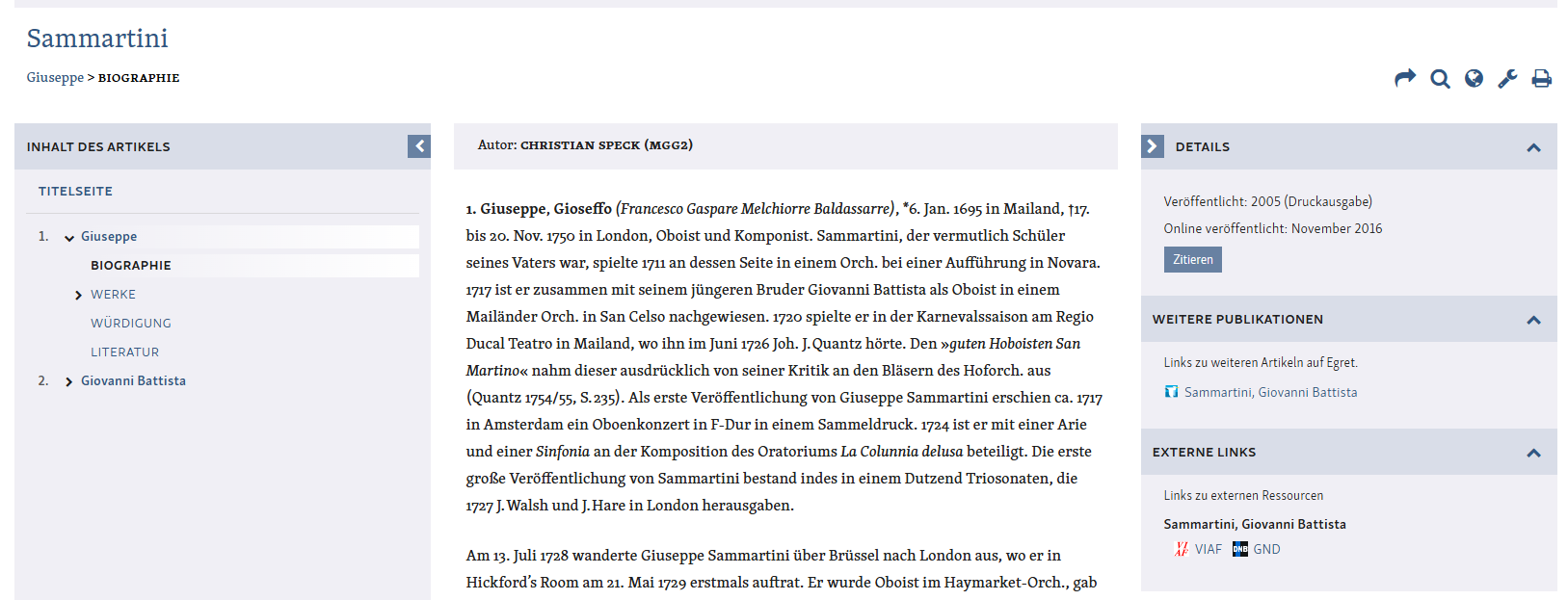
Tradition is a commitment – and opens up new perspectives
More than eight decades after the first ideas for a comprehensive encyclopaedia of music were conceived, and ten years after its launch on the internet, MGG remains true to its original mission: to make reliable scholarly knowledge about music accessible.
MGG Online demonstrates how this goal can be achieved by harnessing the possibilities of the digital age – as a living encyclopaedia that builds on a rich scholarly heritage while constantly evolving.
Further information: www.mgg-online.com
