Milestone Reached in Halle
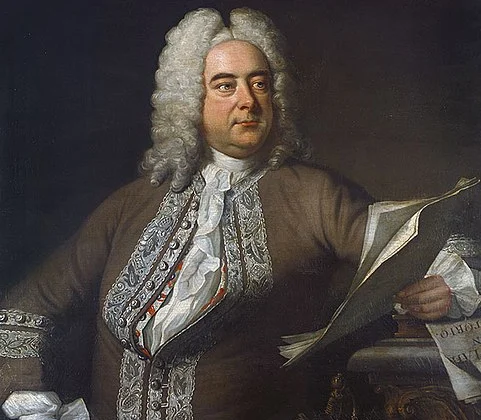
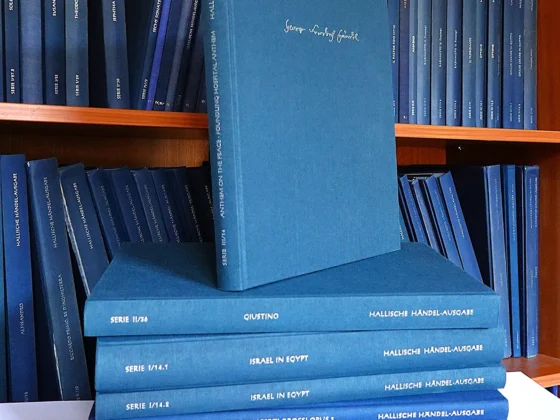
The 100th Volume of the Halle Handel Edition Has Been Published
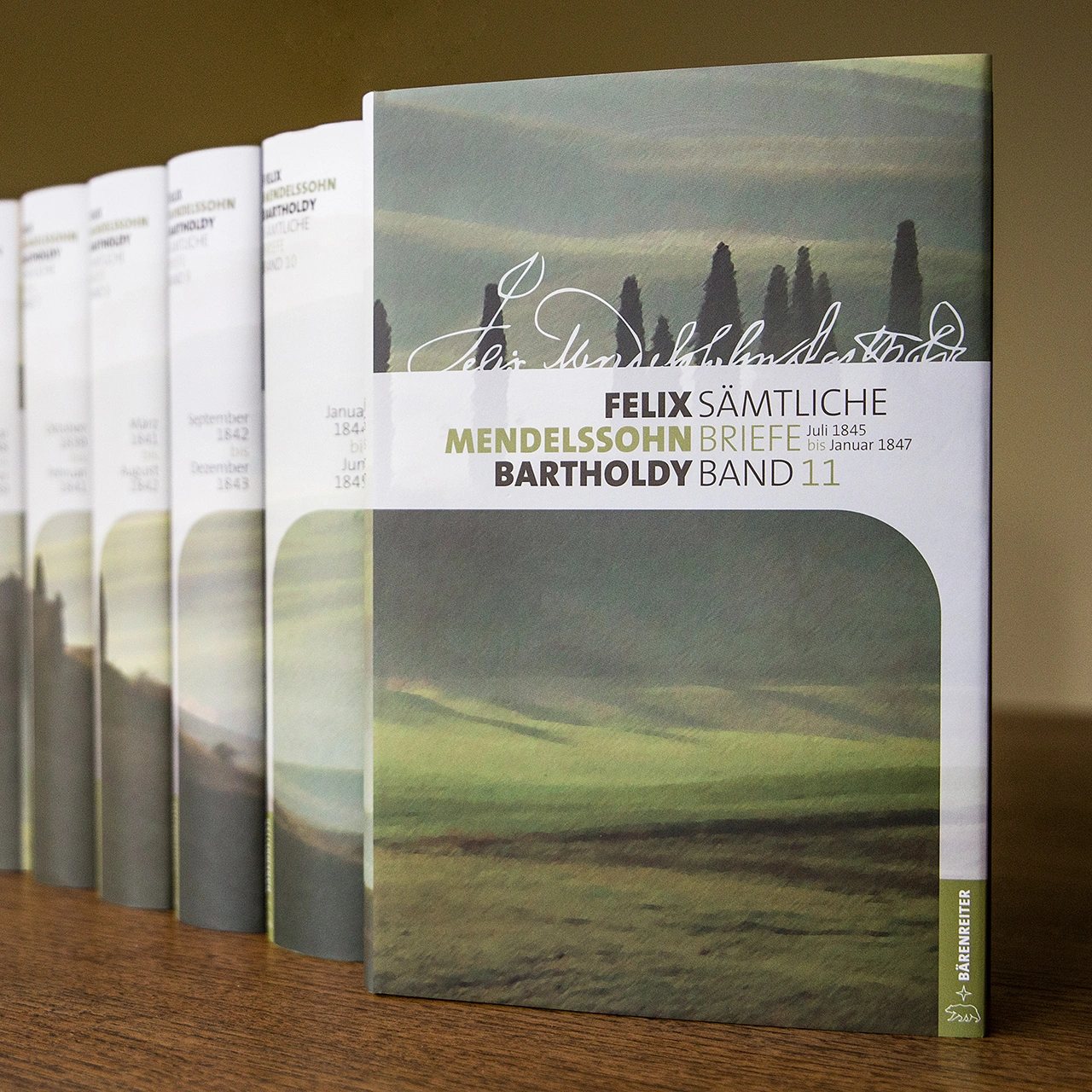
Complete letters in 12 volumes
As one of the most important letter-writers of the 19th century, Felix Mendelssohn Bartholdy maintained an extensive correspondence. With great style and eloquence he wrote letters to friends and family, letters from his travels and he also wrote to leading composers, musicians, artists as well as publishers. He corresponded with famous contemporaries such as Robert Schumann, Franz Liszt and Richard Wagner as well as Johann Wolfgang von Goethe, Carl Friedrich Zelter and Alexander von Humboldt. The correspondence begins in 1816 and ends in 1847 with the composer’s death. These letters are invaluable documents shedding light not only on the genesis, publication and revision of his musical works, but also on a period when relations between Christians and Jews still had a chance to become harmonious, as Moses Mendelssohn, the imminent scholar and grandfather of the composer had advocated.
This edition will therefore be of great interest far beyond the circles of musicologists and music specialists. It will appeal to those who are interested in the history of culture and ideas and to those who perceive Mendelssohn and his family as representatives of a unique, diverse cultural epoch. The complete correspondence shows that Mendelssohn not only went on to become one of the leading figures of German musical culture in the 1840s, but that he also maintained a network of musical contacts throughout Europe.
The design of the 12 volume edition by take off – media services was given a reddot design award in 2009.
The series is complete. The following purchase options are available:
Complete set.
Individual volumes cannot be purchased separately.
For further information, please contact customer service.
The 100th Volume of the Halle Handel Edition Has Been Published
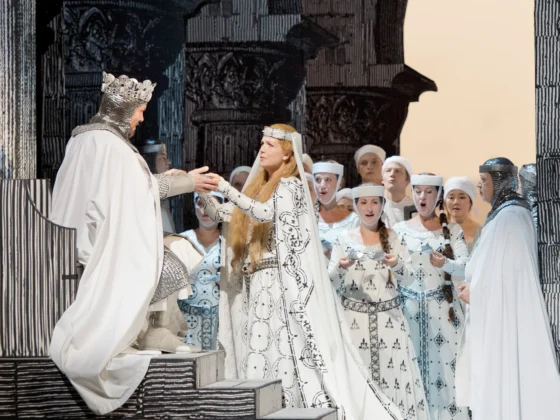
A strong plot, and fabulously imaginative music: but until now Handel’s “Giustino” has not been one of his most frequently-performed operas. With the new edition this could all change.
Franz Schubert’s stage works have never become firmly established in the repertoire. And yet they contain interesting examples of Romantic opera aesthetics. And with the 2028 Schubert anniversary year in mind, they offer a variety of opportunities for productions.
 SHOP
SHOP